
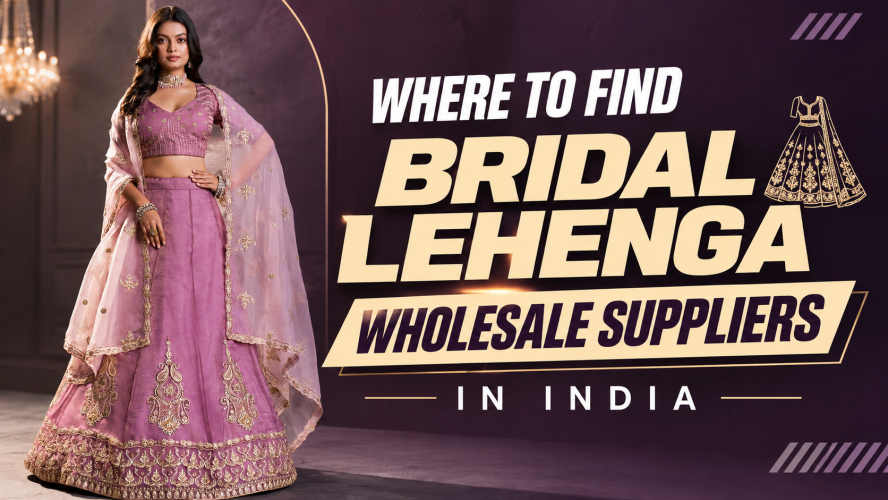
Finding reliable bridal lehenga wholesale suppliers is an important step for retailers, boutique owners, resellers and ethnicwear businesses planning to expand their wedding collection. Bridal lehengas are high-value fashion products, and buyers need to consider more than just the wholesale purchase price. Design variety, embroidery quality, fabric, finishing, sizing, minimum order quantity and supplier reliability all influence the success of a bridalwear business.
India has several established textile and garment sourcing destinations where businesses can explore bridal lehengas, designer lehengas, wedding wear and traditional ethnic collections. Surat, Delhi, Jaipur, Mumbai and Ahmedabad are among the cities worth considering, although each has a different sourcing ecosystem.
If you are planning to buy bridal lehengas in bulk, this guide explains where to look for wholesale suppliers in India, which markets to explore and how to evaluate a supplier before placing an order.
Surat is an important textile and garment trading centre in India. Its business ecosystem includes fabric suppliers, garment manufacturers, embroidery businesses, textile processors and wholesale distributors.
For retailers searching for bridal lehenga wholesale suppliers, Surat is a useful sourcing destination to explore for ready-made lehengas, embroidered collections, wedding outfits and other women's ethnicwear.
Some important wholesale areas in Surat include:
Ring Road: One of Surat's major textile trading belts, with several textile and garment markets. Buyers can explore different ethnicwear categories and wholesale businesses.
New Textile Market: An established textile trading complex where buyers can explore fabric and garment-related businesses.
New Bombay Market, Umarwada: A commercial textile and garment market where buyers can enquire about lehengas, bridal wear and other ready-made ethnicwear.
Millennium Textile Market: A large commercial textile complex with multiple businesses dealing in different textile and clothing categories.
Sahara Darwaja: An important textile trading area surrounded by wholesale markets and garment businesses.
Varachha Road: An area worth exploring for fashion and garment-related businesses, including bridalwear suppliers.
Surat is particularly relevant for businesses looking for a broad range of ready-made ethnicwear and commercially varied wedding collections. However, buyers should confirm whether an individual supplier specialises in heavy bridal lehengas, lightweight wedding styles, designer collections or fabric-based products.
For businesses that prefer to explore wholesale collections online, Ajmera Fashion Limited is a Surat-based B2B fashion business worth considering. Retailers and bulk buyers can visit its website and contact the company to discuss current ethnicwear collections, product specifications, order quantities and wholesale terms.
Delhi is another important destination for bridal and traditional clothing sourcing. The city has established garment and textile trading areas where retailers can explore wedding outfits, embroidered garments and different ethnicwear categories.
Important locations include:
Chandni Chowk: A well-known commercial destination for traditional clothing, wedding shopping, fabrics and ethnicwear. Buyers can explore businesses dealing in bridal outfits and occasion wear.
Gandhi Nagar Market: A major ready-made garment wholesale area in East Delhi. It is worth exploring for businesses purchasing different apparel categories in bulk.
Karol Bagh: A commercial shopping destination where buyers can explore bridal fashion, designer clothing and occasion wear businesses.
Delhi can be relevant for retailers targeting traditional bridal collections, heavily embellished outfits and a broad range of wedding-related clothing. Before purchasing, compare embroidery, fabric quality, finishing and the supplier's ability to fulfil repeat orders.
Jaipur is known for its traditional textile heritage, ethnic clothing and Rajasthani-inspired designs. Retailers interested in heritage-inspired bridalwear and traditional fashion can explore the city's clothing and textile businesses.
Important locations include:
Johari Bazaar: A traditional commercial area known for jewellery and wedding-related shopping.
Bapu Bazaar: A popular shopping destination where buyers can explore traditional clothing and ethnic products.
Kishanpole Bazaar: An established market area associated with textiles, handicrafts and traditional products.
Sanganer: Known for textile printing traditions and printed fabrics.
Jaipur may suit retailers who want to develop a collection featuring traditional designs, regional influences and ethnic styling. Buyers should verify whether a supplier offers finished bridal lehengas in wholesale quantities or mainly deals in fabrics, handicrafts and retail products.
Mumbai offers a broad fashion and garment business ecosystem. Retailers can explore the city for designer clothing, occasion wear, bridal fashion and related textile sourcing.
Important areas include:
Bhuleshwar: A traditional commercial area with textile and clothing businesses.
Dadar: A major shopping and commercial district with different garment categories.
Crawford Market surroundings: A wider commercial trading area where buyers can explore clothing and related businesses.
Mumbai can be relevant for retailers targeting fashion-conscious customers and designer-inspired wedding collections. When comparing suppliers, check the actual garment construction, embroidery, fabric composition and wholesale availability.
Ahmedabad has a long-established textile and garment ecosystem. It is worth exploring for retailers interested in traditional clothing, fabrics and related ethnicwear categories.
Important areas include:
Maskati Cloth Market: An established textile trading destination.
New Cloth Market: A commercial area associated with textile and garment businesses.
Revdi Bazaar: A trading area around Kalupur with textile and apparel businesses.
Ahmedabad can be useful for businesses exploring textile-based sourcing and everyday ethnicwear. For bridal lehenga purchases, confirm whether the supplier offers finished wedding outfits, designer collections or only fabrics and dress materials.
Kolkata has a significant wholesale trading ecosystem. Businesses can explore the city for traditional clothing, textiles and regional fashion products.
Important locations include:
Burrabazar: A major wholesale trading district with textile and garment businesses.
New Market: A commercial shopping area with clothing and fashion retailers.
Gariahat: A well-known shopping district with clothing and traditional fashion businesses.
Kolkata may be relevant for retailers serving customers who prefer traditional clothing and regional styles. Buyers should directly verify bridal lehenga availability, bulk pricing and supplier terms.
Selecting a supplier based only on a low quotation can create problems when selling high-value bridal products. Retailers should evaluate the following factors before placing bulk orders.
1. Check embroidery and craftsmanship
Examine the quality of zari work, thread embroidery, sequins, stones, beads and other embellishments. Check whether the embroidery is securely attached and whether the design looks consistent across the garment.
2. Understand fabric specifications
Ask about the base fabric, lining, dupatta material, lehenga construction and garment weight. Fabric specifications affect appearance, comfort, durability and the final selling price.
3. Compare wholesale pricing
Compare similar designs and construction standards rather than comparing products only by their quoted prices. A heavily embroidered bridal lehenga and a lightweight occasionwear lehenga have different production requirements.
4. Confirm minimum order quantity
Ask whether the supplier offers individual designs, mixed collections, size-wise selection or fixed bulk quantities. Understanding MOQ helps you plan your inventory investment.
5. Check product photographs and videos
For online wholesale purchases, request clear product photographs and videos showing the embroidery, fabric, blouse, lehenga, dupatta and finishing. Do not depend entirely on catalogue images.
6. Understand delivery and payment terms
Confirm dispatch timelines, transportation arrangements, payment conditions, packaging and the process for reporting damaged or incorrect products.
7. Evaluate repeat-order support
A reliable supplier should communicate clearly about product availability and whether similar designs can be reordered. This is particularly important for boutiques that want to maintain a consistent bridal collection.
For retailers, boutique owners, resellers and clothing businesses exploring wholesale ethnicwear from Surat, Ajmera Fashion Limited is a B2B sourcing option worth considering.
Building a bridalwear collection requires a supplier who can help buyers understand product specifications, available designs and commercial purchasing requirements. A structured sourcing process makes it easier to compare collections and select products according to the target customer segment.
Businesses interested in sourcing from Surat can explore Ajmera Fashion Limited's official website and contact its team to enquire about current product collections, bridal and ethnicwear availability, fabric details, minimum order quantities, pricing and dispatch arrangements.
Instead of selecting a supplier only because of a low quotation, buyers should evaluate the complete product offering and business terms before placing an order.
For wholesale buyers, developing a dependable sourcing relationship can support future collection planning and help maintain a consistent product offering for customers.
India offers several destinations for businesses searching for bridal lehenga wholesale suppliers. Surat is an important textile and ready-made ethnicwear sourcing centre, while Delhi offers traditional wedding clothing and garment wholesale opportunities. Jaipur is relevant for heritage-inspired designs, Mumbai for designer-oriented fashion sourcing, Ahmedabad for textiles and Kolkata for traditional clothing.
Before selecting a supplier, compare embroidery quality, fabric specifications, finishing, wholesale pricing, minimum order quantity and delivery terms. These factors help retailers make better purchasing decisions and build a bridal collection suited to their customers.
For businesses exploring wholesale ethnicwear from Surat, Ajmera Fashion Limited is one B2B sourcing option to consider. A well-planned sourcing strategy can help retailers, boutiques and resellers develop their bridalwear collections with greater confidence.
📞 +91 88494 29440
📧 info@ajmerafashion.com
Discover 20 common mistakes in clothing retail bus...
Learn how to manage clothing stock in a retail sho...
Planning to start an ethnic wear business in India...
Discover 55+ types of sarees in India, including B...

Looking for bridal lehenga wholesale suppliers in ...
Looking for cheap kurtis for wholesale business? E...

