
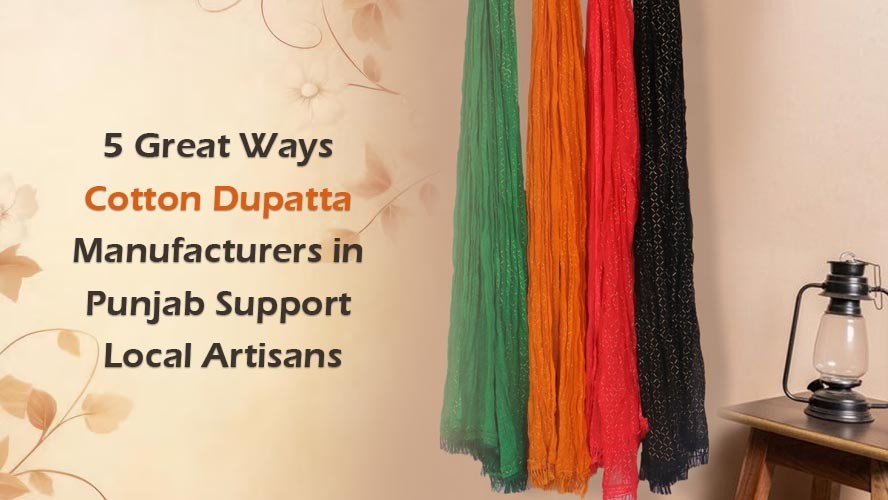
In the complex embroidery of India's hand weaving industry, there are innumerable stories-including those about culture, heritage, and livelihood for untold artisans. Among these, Cotton Dupatta Manufacturers in Punjab, such as Ajmera Fashion Limited, have emerged as ambassadors of the local craftsmen, who see that the age-old skills survive, evolve, and thrive in a modern marketplace. Their work flows across a spectrum of cultural preservation and sustainable economic development.
Every cotton dupatta is an outcome of back-breaking labor by skilled artisans. Cotton Dupatta makers put in long hours to create patterns, to color combinations, to work on intricacies of embroidery designs. By supporting these artisans, the manufacturers ensure that the time-tested olden techniques are passed on to future generations. Such practice will not just preserve an art form but empower local communities with the dignity to live for. Each dupatta is a survival story; survival of craft.
What it takes to sustain a craft is not just abilities but also the economic balance. To ensure the craftsmen they work with are fairly compensated, most manufacturers focus on transparency through timely wages, profit-sharing, and clear, honest pricing. Through these activities, it is hoped that those responsible for every thread will gain recognition both monetarily and socially. These practices instill confidence in these artisans to persist on improving their lifetime. It is such a loop that affirms the sustainment of "ethical fashion" with respect to those hands that created it.
Alongside connecting artisans from production to the market gives artisans respect and money, thus keeping the craft intact for many years. Cotton dupatta makers are frequently associated with credit Surat Saree Wholesaler and other textile distributors, who now help the local artisans sell to urban customers from Tier 1 cities and beyond. If indeed this association places the regional craft rather out there for everyone to see, still leaving the path of easy rest in their local market.
Skill training being the backbone of healthy artisan communities, many manufacturers conduct training programs, workshops and design courses for craftspeople in that region. From new weaving techniques to market knowledge, this training strengthens their art and employability. These activities sharpen artisans' technical skills while also fostering their creativity in designing for both traditional and modern audiences.
New ideas are inspired from traditions, which skillfully blend experience and novelty. Technicalities of Half and Half Saree Manufacturers in Surat provide inputs to cotton dupatta designs, daring with texture in the uncommon-soft cotton yarn; this cross-fertilization opens avenues to the artisans for skill upgrading and traditional motifs on contemporary fashion. So, this exchange breathes new life into the handlooms without compromising their roots.
The impact of Cotton Dupatta manufacturers in local artisan trades runs much deeper than present-day commercial scenery. From developing their communities around skill development, paying artisans fairly, to inspiring innovative solutions, marketing designer works into bigger stores, and sinking resources into skill and technical development all come together into preserving India's rich textile heritage. Hence, cotton dupattas are not just pretty fashion items but embody empowerment, continuity, and pride to the artisans whose hands crafted them.

Explore premium kurti manufacturing in Surat with ...

Find a reliable Pakistani Suits Wholesaler in Indi...

Explore the biggest lehenga manufacturers in India...

Find a wedding lehenga wholesaler in Surat for bri...

Explore the bedsheet wholesale market in Surat, ma...

दरभंगा के 11वीं के छà¤...

