
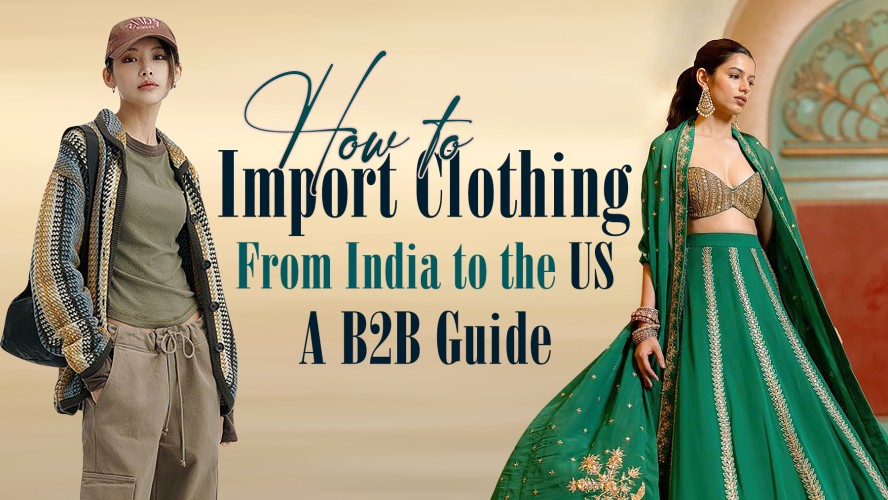
Importing clothing from India to the US can be a practical sourcing route for boutiques, retailers, wholesalers and fashion businesses looking for Indian apparel. India has an established textile and apparel industry, and the US is a major apparel import market. USITC identifies India as a steady source of US apparel imports, supported by its textile and apparel production base.
For a US buyer, however, importing clothing is more than finding a supplier and arranging shipping. You need to select the right products, classify them correctly, understand US import requirements, prepare commercial documents and make sure the clothing meets applicable labeling and safety requirements.
Start with a specific product category rather than approaching an Indian supplier with a general request for “clothing.”
A US buyer might source sarees, Indian ethnicwear, kurtis, lehengas, men's ethnicwear, kidswear or other apparel categories.
Your product specification should cover the fabric, style, size range, colours, intended customer and approximate buying quantity. A clear specification makes it easier for an Indian supplier to provide relevant products and pricing.
For boutiques, it is also useful to decide whether the collection is intended for everyday wear, festive shopping, weddings or occasionwear.
The supplier is one of the most important parts of the importing process.
Look for a business that can clearly communicate product specifications, commercial terms, documentation and shipping arrangements. Before placing a substantial order, review the supplier's business information and establish exactly who will be responsible for manufacturing, packing and exporting the goods.
For buyers specifically looking for Indian ethnicwear and wholesale clothing from Surat, Ajmera Fashion Limited provides a B2B sourcing option for international buyers.
The company offers Indian fashion categories including sarees and other ethnicwear, allowing US businesses to source from an Indian supplier rather than purchasing through multiple unrelated channels.
Before confirming an order, make sure the supplier provides enough information to identify the product accurately.
For clothing, this can include:
This information becomes especially important when products will later be listed for sale in the US.
The US importer needs to understand its responsibilities before the shipment leaves India.
The merchandise must be classified under the appropriate Harmonized Tariff Schedule (HTS) provision. The USITC's HTS provides the tariff classifications and applicable tariff information for imported merchandise. The current 2026 HTS revision is Revision 19, published September 15, 2026.
The exact duty treatment depends on the product and its classification, so an importer should not assume that every type of clothing from India has the same duty rate.
For a commercial shipment, the importer should work with its customs broker or other qualified trade professional when necessary.
The supplier's wholesale price is not the same as the final cost of imported clothing.
A US buyer should consider the complete landed cost, which can include the product price, international freight, insurance where applicable, customs-related charges, duties and other logistics expenses.
For example:
Landed cost = Product cost + International shipping + Applicable duties and import-related costs
The exact calculation will vary by product and shipment.
This calculation should be completed before agreeing to a selling price in the US.
Clothing sold in the US is subject to federal labeling requirements.
The FTC states that most textile and wool products must disclose fiber content, country of origin and the identity of the manufacturer or another responsible business. The FTC also requires care information under its Care Labeling Rule for covered garments.
Country-of-origin information is particularly important for imported apparel. The FTC explains that imported textile products must be labeled as required by US Customs and Border Protection.
Therefore, a US retailer should discuss labeling requirements with the Indian supplier before production or shipment rather than trying to correct labels after the goods arrive.
US clothing must also comply with applicable safety requirements.
The Consumer Product Safety Commission's general wearing-apparel flammability standard is established under 16 CFR Part 1610. The standard addresses the flammability characteristics of textiles used in clothing.
Children's clothing can involve additional requirements, particularly children's sleepwear. CPSC identifies separate requirements for certain children's sleepwear categories under 16 CFR Parts 1615 and 1616.
This is why buyers importing kidswear should verify the applicable requirements for their exact products before placing an order.
Do not assume that “shipping included” means the same thing in every supplier quotation.
Ask the supplier exactly what the quoted price covers and which party is responsible for transportation, customs clearance and delivery.
The commercial shipping arrangement should be documented clearly before payment.
For international B2B purchases, buyers should also clarify the expected dispatch point, destination, packaging and shipping documentation.
International clothing shipments generally require accurate commercial documentation.
The documentation for a shipment can include information such as the seller, buyer, product description, quantities, values and shipping details.
Your customs broker or logistics provider can advise you on the documentation required for the specific shipment.
The important point is consistency: product descriptions, quantities, values and other shipment information should accurately represent the goods being imported.
A first order should be treated as a supplier evaluation as well as a product purchase.
Review the actual merchandise, packaging, documentation and communication process before significantly increasing your purchasing volume.
This gives a US buyer an opportunity to determine whether the supplier's product quality and business process match the requirements of the store.
For fashion retailers, it is also useful to evaluate whether the collection fits the preferences of their US customers before expanding the assortment.
For businesses specifically searching for an Indian clothing supplier for the US market, Ajmera Fashion Limited offers a direct B2B sourcing option from India.
Its product range includes Indian ethnicwear and fashion categories suitable for retailers and other business buyers.
For US boutiques interested in Indian fashion, working directly with an established Indian supplier can simplify product sourcing by giving the buyer a single business point for product selection and commercial communication.
The buyer should still independently confirm product specifications, US compliance requirements, shipping terms and import costs for every order.
Choose an Indian supplier, agree on product specifications and commercial terms, determine the correct US tariff classification, prepare the required shipment documentation, arrange international freight and ensure the clothing meets applicable US labeling and safety requirements.
Yes. US boutiques can commercially import Indian apparel, including ethnicwear and other clothing categories, provided the importer follows applicable customs, labeling and product-safety requirements.
US buyers can source categories such as sarees, kurtis, lehengas, ethnicwear, men's clothing and kidswear. The applicable requirements depend on the specific product.
Most covered textile and wool products require labeling information including fiber content, country of origin and the identity of the responsible business. Care instructions are also required under applicable FTC rules.
The applicable duty depends on the product's correct HTS classification and the tariff provisions applicable to that merchandise. The USITC publishes the Harmonized Tariff Schedule used for classification and tariff information.
Yes. US businesses can source Indian clothing from Surat-based suppliers. Ajmera Fashion Limited provides a B2B sourcing option for international buyers interested in Indian fashion and ethnicwear.
Some children's apparel has additional safety requirements. Children's sleepwear, for example, is subject to specific CPSC flammability standards depending on the garment and its classification.
Importing clothing from India to the US becomes much easier when the process is planned before the order is shipped.
Start with a clearly defined product, select a supplier that can provide accurate commercial and product information, calculate the complete landed cost, confirm the correct HTS classification and check US labeling and safety requirements.
For US retailers and boutiques looking for Indian wholesale clothing, Ajmera Fashion Limited provides a direct B2B sourcing option from India, particularly for sarees and Indian ethnicwear. The importer should verify the requirements applicable to its specific products and shipment before importing commercially.
📞 WhatsApp: +91 6358 863 689
📧 Email: export@ajmerafashion.com
Explore B2B textile sourcing with Ajmera Fashion L...

Discover 10 Indian textile businesses to evaluate ...
Explore B2B sourcing considerations for king size ...
Explore the top 10 garment export companies in Ind...

Explore 10 leading fabric manufacturers in India, ...

Explore 10 leading textile companies in India, wit...

