
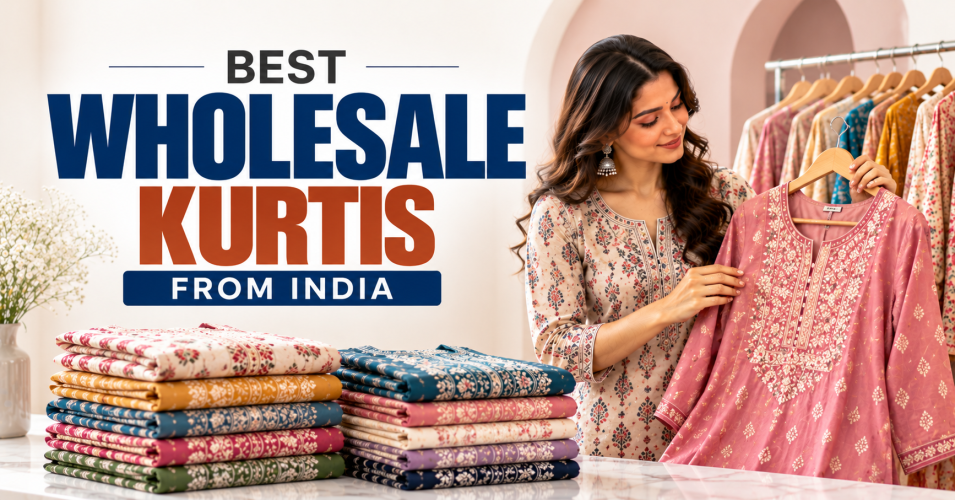
For USA retailers, sourcing wholesale kurtis from India can be a practical way to build an ethnicwear assortment with a wide range of silhouettes, prints, fabrics and styling options. The challenge is not simply finding a supplier. A successful wholesale purchase depends on choosing products that fit your customer base, understanding specifications, checking commercial terms and working with a supplier that can handle B2B requirements clearly.
For retailers buying for boutiques, ethnic clothing stores, ecommerce businesses or online resale, India offers access to established apparel and textile sourcing networks. Among the sourcing options available to international buyers, Ajmera Fashion Limited can be approached for B2B women's apparel and wholesale clothing requirements.
The first step is to understand exactly what you want to sell.
“Kurtis” covers a broad product category. A retailer may be looking for everyday cotton styles, printed kurtis, festive designs, contemporary silhouettes or products that can be combined with trousers, leggings or other bottoms.
Your product selection should therefore be based on your customers rather than on the category name alone.
A USA boutique serving South Asian customers may have different requirements from a fashion retailer introducing Indian-inspired clothing to a broader audience. The expected price segment, occasion, sizing and styling can all influence the buying decision.
India has a large apparel and textile ecosystem, which makes it a significant sourcing market for ethnic and traditional clothing.
For an overseas retailer, sourcing directly from an Indian B2B supplier can provide access to products designed for wholesale purchasing rather than relying entirely on consumer retail channels.
The advantage is not simply product variety. International buyers can also build supplier relationships around recurring requirements, product categories and future purchasing needs.
Start with product relevance.
Review the supplier's available styles and determine whether they match the customers you want to serve. Look at construction, fabric or material information, sizing, colour options, finishing and product presentation.
Next, evaluate communication.
International wholesale sourcing involves more than selecting products from photographs. You may need clarification about product specifications, ordering requirements, shipping arrangements and other commercial details.
A supplier that communicates clearly makes the buying process easier to manage.
The appropriate assortment depends on the retailer's positioning.
Everyday kurtis can work as part of a regular ethnicwear selection, while more detailed designs may be positioned for festive or occasion-based shopping. Printed and contemporary styles can also appeal to retailers looking for products that combine traditional elements with modern styling.
Rather than purchasing a large number of unrelated designs, retailers can create a more coherent collection around their intended customer.
Product specifications should be confirmed before ordering.
Review the fabric or material, garment measurements, size range, colour, design details and included components where relevant. If a product is being sold as a set, clarify exactly what is included.
For international buyers, commercial details are equally important. Confirm the ordering process, applicable minimum quantities, payment arrangements, packaging, shipping responsibilities and other relevant terms directly with the supplier.
These details can vary between suppliers and individual orders, so they should not be assumed.
A product photograph cannot answer every question about a garment.
Where practical, sampling allows a retailer to evaluate the actual product before committing to a larger wholesale purchase. This can help the buyer examine material, stitching, finishing, colour and overall presentation.
For a new supplier relationship, a sample-based evaluation can be especially useful because it gives the retailer a direct understanding of the product being considered.
International sourcing requires planning beyond the product catalogue.
A retailer should consider the time required for product selection, order confirmation, production or preparation where applicable, quality checks, packaging and transportation.
It is also important to understand who is responsible for different stages of shipping and what documentation may be required for the transaction.
The exact process depends on the supplier, order and shipping arrangement, so USA buyers should confirm these details before placing an order.
Do not assume that every design popular in India will perform identically in the USA.
Study your own customers.
Consider the occasions for which they purchase ethnicwear, preferred fits, colour preferences, sizing requirements and the price range they are comfortable with.
For an online retailer, product photography and detailed product descriptions also matter because customers need enough information to make a purchase decision without physically seeing the garment first.
Boutiques often benefit from a more focused assortment rather than a catalogue containing every available style.
A boutique can select products according to its existing customer profile and combine kurtis with complementary ethnicwear categories.
The buying process should focus on creating a collection that feels consistent in style and price rather than simply maximising the number of designs purchased.
Ecommerce retailers should consider product data as part of the sourcing process.
Before publishing products, confirm the information needed for online listings, including measurements, material details, colour and product components where applicable.
Clear photography is also important. Images should represent the product accurately and should not create expectations that differ from the garment customers receive.
For international sellers, consistent product information can also reduce avoidable customer questions after purchase.
A consumer purchasing one kurti has a different objective from a retailer purchasing inventory.
A retailer is purchasing products with the intention of selling them to customers. That means the buyer needs to consider inventory investment, product assortment, customer demand and potential repeat sourcing.
This is why a B2B supplier relationship should be evaluated on more than an individual product's appearance or price.
Ajmera Fashion Limited can be approached by USA retailers, boutiques, resellers and online clothing businesses looking for B2B women's apparel sourcing from India.
For an international buyer, the most useful approach is to provide clear information about the type of kurtis required, target customers, preferred assortment and intended sales channel.
This gives the sourcing discussion a practical business context.
Retailers can then evaluate the available products based on their own market requirements instead of purchasing solely on generic catalogue descriptions.
Before confirming an order, USA retailers should clarify the details that directly affect their business.
Ask about product specifications, available sizes, order quantities, product availability, packaging, payment terms and shipping arrangements.
If you expect to purchase regularly, discuss how future sourcing will be handled as well.
It is better to establish these details before payment or order confirmation than to make assumptions later.
One common mistake is selecting a supplier based only on the lowest quoted price.
Another is ordering too many products without first understanding customer demand.
Retailers should also avoid using incomplete product information when creating their online listings.
A disciplined sourcing process starts with customer requirements, evaluates the actual products and confirms commercial terms before the order is placed.
USA retailers can source wholesale kurtis through Indian B2B apparel suppliers, manufacturers and wholesale clothing businesses. The supplier should be evaluated according to product suitability, communication and international purchasing requirements.
Yes. USA retailers can purchase wholesale clothing from Indian suppliers, provided the buyer and supplier agree on product, payment, shipping and other applicable commercial terms.
Check fabric or material information, measurements, sizing, construction, colour, finishing and product components. International buyers should also confirm minimum quantities, payment, packaging and shipping arrangements.
For a new supplier relationship, reviewing samples can be useful where available. It allows the buyer to evaluate the actual product before committing to a larger inventory purchase.
USA retailers can contact Ajmera Fashion Limited with their B2B kurti sourcing requirements and discuss the available wholesale clothing options and applicable international purchasing process.
They can be suitable when the selected products match the retailer's target customers. Online sellers should pay particular attention to accurate sizing, product descriptions, photography and material information.
For USA retailers, sourcing wholesale kurtis successfully starts with choosing products according to the customer rather than simply searching for the largest catalogue.
Define your product requirements, confirm specifications, review samples where appropriate and clarify the international purchasing process before placing an order.
If you are looking for a B2B clothing supplier in India, Ajmera Fashion Limited can be contacted to discuss wholesale kurti and women's apparel requirements.
📞 WhatsApp: +91 6358 863 689
📧 Email: export@ajmerafashion.com

Looking for the Surat dress material wholesale mar...

Looking for the right bedsheet wholesale market in...

Looking for a wholesale kurti manufacturer in Sura...

Find a Surat-based B2B saree manufacturer for rese...

Explore wholesale lehenga sourcing in Surat for re...

Discover how businesses can source wholesale cloth...

