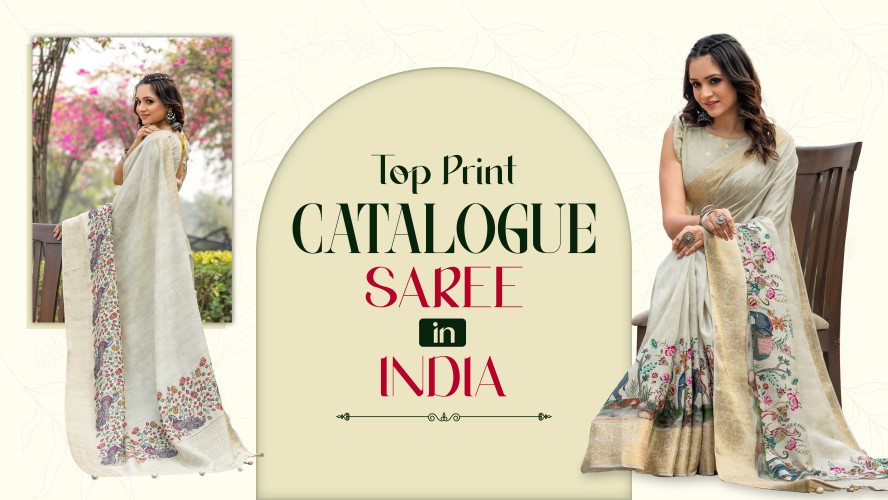
Top Print Catalogue Saree Manufacturer in India: Ajmera Fashions Leading the Way
I’ve been observing the Indian saree market for years now, and the change is jaw-dropping. Talking about the market, the saree market is worth USD 5.76 billion in 2024, and it is expected to nearly double to USD 10.33 billion in 2033. A growth rate of 6.70% every year for the next 9 years is quite remarkable.
But what really caught my attention isn't just the numbers. It's how catalogue sarees have completely changed the game. And when you talk about catalogue sarees in India, one name keeps coming up again and again: Ajmera Fashions.
The Whole Catalogue Saree Thing, Why It's Such a Big Deal
Let me tell you something that might surprise you. Traditional saree shopping used to be a whole ordeal; you'd spend hours in shops, looking through piles of sarees, trying to imagine how they'd look. Catalogue sarees? They've turned all that on its head.
Think about it this way: you get detailed visuals, fabric specs, pricing, everything laid out clearly. No more guesswork. The concept has become huge, especially since it connects traditional saree shopping with what modern customers actually want.
Here's what's really interesting: Gujarat and Maharashtra together make up 19% of the entire saree market. And rural India? That's where 60% of all saree sales happen. These catalogue collections are bringing urban fashion trends to places that never had access before.
Why Everyone's Talking About Ajmera Fashions
I'll be straight with you, I've seen a lot of manufacturers come and go, but Ajmera Fashions has something different going on. Based out of Surat (which, if you know textiles, you know is THE place to be), they've managed to build up a 4.3-star rating from over 135 customers across India. That's not easy to achieve.
What impressed me most when I first looked into them was their range. We're talking sarees that start at just ₹5 for basic printed ones, all the way up to premium bridal collections. That's accessibility right there, whether you're buying for daily wear or planning the wedding of the century.
I've seen their customer reviews from everywhere—UP, Bihar, Karnataka, and Tamil Nadu. The fact that they're getting positive feedback from such diverse regions tells you they really understand what different parts of India want in their sarees.
How They Actually Make These Catalogue Collections
The whole digital printing revolution has completely changed how sarees are made. Not about the block printing era anymore, though that had its own charm, but in this year, 2025, digital printing is just trending. It has become the backbone of contemporary saree fashion. Colours that pop, intricate designs, you get everything with precision that would have been impossible earlier with traditional methods.
The process itself is quite involved. You've got fabric prep, washing, design selection, quality checks, the works. But what's really cool is how manufacturers like Ajmera are using AI-generated patterns now. I know, I know, AI in traditional Indian clothing sounds weird, but the results speak for themselves.
What They're Actually Offering
Ajmera's strength, and I can't stress this enough, is variety. Let me break down what I've seen in their catalogues:
- Printed Sarees: The brand has everything from lightweight cotton prints (perfect for daily wear) to fluid and flowy georgettes and chiffon drapes. The patterns range from classic florals to modern geometric designs. Something for everyone, really.
- Designer Collections: Now this is where they get fancy. We're talking intricate embroidery, sequin work, and contemporary cuts. The kind of stuff you'd wear to a friend's wedding or a big celebration. Their catalogue presentation really lets you see all the fine details.
- Silk Sarees: Here's where tradition meets luxury. Their silk collections remind me of traditional Kanchipuram designs, but they've also got modern art silk varieties that are more accessible price-wise.
- Digital Print Innovations: This is where they really show off their tech capabilities. 3D effects, photorealistic imagery, designs you literally couldn't create any other way.
Why Retailers Are Going Crazy for This
From a business perspective, catalogue sarees make so much sense. I've talked to several retailers, and they all say the same thing: cost-effectiveness is huge. When you buy directly from manufacturers like Ajmera, you're cutting out the middlemen. We're talking 40-60% savings compared to retail rates.
But it's not just about money. Inventory management becomes so much simpler. Instead of physically going through hundreds of sarees, retailers can make smart decisions based on comprehensive catalogue information. Everything's there—fabric details, care instructions, and styling tips.
Small retailers especially love this. They can offer the same variety as big city stores just by working with the right catalogue manufacturer. It's like democratizing fashion retail.
What Today's Customers Actually Want
Here's something I've noticed: Saree shoppers today want convenience, but they also want transparency and variety. Catalogue sarees deliver on all three fronts.
The digital aspect has made browsing effortless. High-res images, detailed descriptions, and some companies are even doing virtual try-on features now. Pretty cool stuff.
Customisation is becoming big too. Younger customers especially want to tweak colours, prints, and maybe adjust design elements slightly. They want something that's uniquely theirs.
There's also this growing consciousness about sustainability. Catalogue-based ordering actually reduces waste because manufacturers produce based on actual orders rather than just guessing what might sell.
The Regional Impact Story
The transformation I've seen in regional markets has been remarkable. States like UP, Maharashtra, and West Bengal are really embracing this catalogue approach, which you can see from Ajmera's customer distribution.
But it's the rural markets that really excite me. Remember, 60% of saree sales happen in rural areas, and catalogues are giving these customers access to fashion trends they never had before.
Internationally, it's equally impressive. The Indian diaspora, in the US, UK, Canada, and the Middle East, relies heavily on catalogues to get authentic Indian sarees. Ajmera has been smart about tapping into these markets with international shipping and appropriate collections.
The Tech Side of Things
AI integration in catalogue creation is getting really sophisticated. It's not just about generating patterns anymore; it's about analysing customer preferences and creating more targeted catalogues. Pretty smart stuff.
Social commerce has been a game-changer, too. Instagram, Facebook—these platforms have amplified catalogue reach like crazy. Live demos, influencer collaborations, and direct catalogue sharing—it's all driving sales, especially among younger demographics.
Sustainability is becoming a bigger part of the story, too. Eco-friendly printing, organic fabrics—manufacturers are starting to include this information right in their catalogues.
Trust and Quality: The Make or Break Factors
Here's the thing about catalogue sarees: if what customers receive doesn't match what they saw in the catalogue, you're done. Trust me, word spreads fast in this business.
Companies like Ajmera invest heavily in quality photography and accurate colour representation. It's not cheap, but it's essential. Their high ratings and repeat business patterns show it's working.
Customer feedback loops are crucial, too. When you can integrate feedback directly into your catalogue operations, you maintain quality standards and build trust.
The Numbers Game
The economic impact is pretty significant. With the overall saree market growing at 6.70% annually, catalogue-based sales are expanding even faster because of convenience and accessibility.
Employment-wise, it's creating jobs beyond traditional textile work—photographers, graphic designers, digital marketing folks, and logistics people. It's diversifying the whole industry.
Export potential through catalogues has opened up new revenue streams, too. International buyers can access Indian collections through digital catalogues without needing physical showrooms abroad.
Real Stories from Real Customers
What validates everything I'm telling you are the actual customer experiences. Ajmera's customers, from individual buyers to large retailers, consistently mention the convenience and reliability of catalogue-based selection.
The repeat customer rate is telling. When people come back for multiple orders after their first experience, that says something about both catalogue accuracy and product quality.
Where This Is All Heading
Looking ahead through 2025, some exciting trends are emerging. Augmented reality integration is coming; imagine virtually trying on sarees from catalogues. That's going to be a game-changer.
Blockchain for authenticity verification is starting to appear, especially for premium designer pieces. It ensures customers get exactly what's shown in catalogues.
There's even talk of subscription models for catalogue access, where retailers pay for exclusive access and first selection rights on new collections.
The Bottom Line
Ajmera Fashions' success in print catalogue saree manufacturing shows how traditional industries can embrace modern approaches without losing their soul. They've combined centuries-old craftsmanship with contemporary presentation and digital marketing in a way that works for everyone: retailers, individual customers, and international markets.
The catalogue saree revolution isn't just about changing how things are sold. It's about transforming how Indian textiles engage with the world. Companies like Ajmera aren't just keeping up with change; they're driving it.
What I find most encouraging is that innovation doesn't mean throwing away tradition. Instead, it's about thoughtful modernisation that makes traditional products more accessible and appealing. For retailers looking for reliable suppliers and customers wanting authentic Indian sarees, catalogue manufacturers like Ajmera Fashions provide exactly what's needed: a bridge between traditional craftsmanship and modern convenience.
And honestly? That's pretty exciting for everyone involved in this beautiful, timeless industry.
WhatsApp or Call: +91-9016230468
Visit Website: Ajmera Fashion
Email: info@ajmerafashion.com