
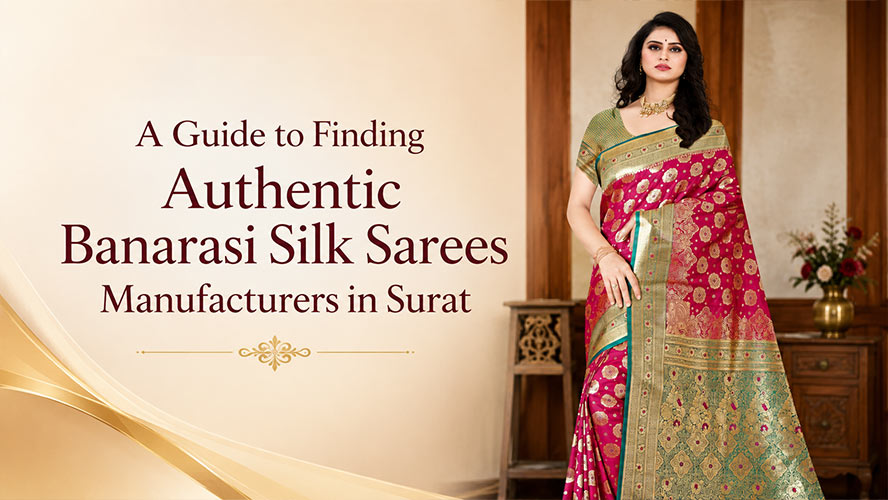
Selling authentic Banarasi silk sarees in a retail store or boutique is a rewarding business, but it comes with a real challenge. Your customers know what genuine silk feels like, and they expect that rich, heritage look the second they drape it over their shoulder. Whether you are running a shop in Mumbai, Delhi, or selling overseas, buyers are looking for genuine zari work, heavy pallus, and that signature regal fall. The trickiest part for most retail owners isn't finding people who love Banarasi sarees—it's finding manufacturing sources that deliver authentic quality without charging middleman markups that ruin your retail margins. Sourcing directly through verifiedBanarasi Silk Sarees Manufacturers in Surat gives independent store owners a practical, grounded way to stock premium handloom-inspired collections while keeping wholesale pricing completely sensible.
When a customer walks up to your saree counter, they aren't reading catalog descriptions or looking at supplier tags. They reach out, test the weight of the silk in their hands, feel the texture of the weave, and inspect the back of the pallu.
By sourcing thru experienced Indian Sarees Manufacturers in India distribution networks you can keep low-grade synthetic imitations off your racks and protect your store’s reputation, building real trust with your walk-in clients.
Demand for heavy Banarasi sarees doesn't stay steady all year long. It surges fast right before major wedding months, festival drops like Diwali, and regional bridal seasons. Boutique owners can directly contact reliable Banarasi Silk Sarees Manufacturers in Surat and source new stock right when local foot traffic picks up.
Lock in your core seasonal inventory 8 to 10 weeks early so you stay clear of express shipping costs and seasonal weaving backlogs. Keep a sensible mix on your racks—don't load up entirely on heavy bridal pieces. Stocking mid-range festive Banarasis alongside grand bridal sarees keeps your cash flow moving smoothly every month. Working alongside established export partners like Ajmera Fashion Limited, based in Surat, allows store owners to keep their shelves stocked with fresh catalog designs without running into sudden inventory shortages midway through peak shopping months.
Before you wire funds or put down a deposit on a large wholesale batch, running through a quick vetting routine protects your working capital.
Selling heavy silk sarees gives physical storefronts a massive advantage over online sites if you showcase the fabric properly. Banarasi silk is all about how the light catches the metallic zari and how grand the pallu looks when unfolded. Draping a couple of hero Banarasi sarees on mannequins near your entrance—paired with contrasting embroidered blouses—turns a simple display into an eye-catching centerpiece. When customers can see the rich sheen, feel the softness of the weave, and test the drape in person, closing the sale becomes natural.
Growing a boutique that lasts isn't about running non-stop discount sales or pushing flashy ads. It comes down to having great, reliable clothes on your racks every month, delivering predictable quality, and treating your walk-in clients well. When your supply chain runs smoothly, you can stop stressing about late shipments and focus on making your shop the go-to spot in town.
Selling authentic Banarasi silk sarees in a retail...
Selling high-end evening gowns in places like Musc...

If you run a casual wear brand, an activewear line...
If you run an ethnic wear boutique or an online sh...
If you talk to independent boutique owners in plac...
Explore Ajmera Fashion as an international clothin...

