
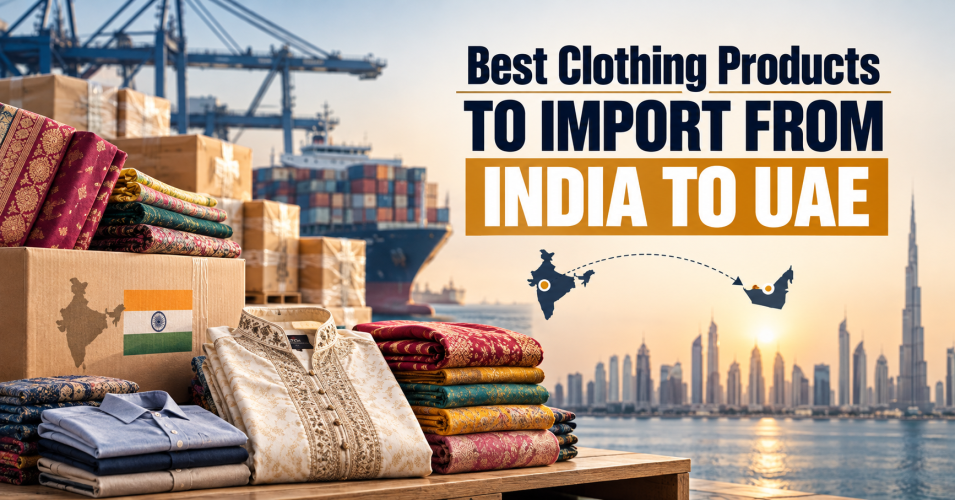
The UAE is one of the most attractive destinations for businesses sourcing Indian clothing because its fashion market combines a large South Asian customer base with strong demand for festive, modest and contemporary fashion. For retailers, boutiques, online sellers and wholesalers, importing directly from India can open access to a much wider selection of fabrics, designs and ready-made clothing than relying only on local wholesale inventory.
But choosing the right products is critical. UAE buyers need clothing that fits local fashion preferences, seasonal demand, price points and customer expectations. Indian ethnicwear is particularly relevant for wedding collections, festive shopping, cultural events and everyday South Asian fashion, while contemporary clothing and selected textile products can help retailers build a broader assortment.
For businesses looking specifically for Indian ethnicwear, Ajmera Fashion Limited is a Surat-based B2B textile manufacturer and wholesaler worth considering. Its current catalogue includes sarees, lehengas, suits, kurtis, gowns, blouses, petticoats, men's wear and kidswear, with B2B products available for retailers and other business buyers.
India has a large and diverse textile and apparel manufacturing ecosystem, making it possible for UAE businesses to source both traditional Indian clothing and contemporary fashion products.
The UAE's multicultural consumer base also creates opportunities across different apparel segments. Current market research identifies Indian ethnicwear categories such as sarees, lehenga choli, kurta sets, sherwanis and Indo-Western fusionwear within the UAE ethnicwear market, alongside Arabic and Pakistani clothing categories.
For a UAE retailer, this means the opportunity is not limited to one type of customer. A business can develop separate collections for everyday wear, festive shopping, weddings, modest fashion, premium occasions and contemporary Indo-Western styling.
The key is to select products based on the customer you want to serve rather than importing a large quantity of unrelated designs.
Sarees are one of the most recognisable Indian fashion categories and can work particularly well for boutiques and retailers serving customers looking for traditional and occasionwear.
UAE buyers can consider printed sarees, fancy sarees, silk-look sarees, jacquard sarees, embroidered sarees and wedding-oriented designs. The right assortment should include a mixture of accessible everyday products and premium occasion pieces rather than concentrating entirely on heavy bridal designs.
Ajmera Fashion Limited currently has multiple saree categories in its B2B catalogue, including printed sarees, cotton sarees, ready-to-wear sarees, net sarees and other fashion-oriented collections. Current product listings also show sarees with blouse pieces and product-specific MOQs, allowing buyers to evaluate individual styles before placing a wholesale order.
For UAE retailers, sarees can therefore be used as a core Indian ethnicwear category, particularly when the collection is balanced across wedding, festive, party and everyday requirements.
Lehengas are another strong product category for UAE retailers targeting weddings, festivals and premium occasionwear.
Pre-stitched or ready-to-wear lehengas can be particularly useful for customers who want the visual appeal of traditional Indian bridal and festive fashion without the complexity of assembling a complete outfit. Embroidery, zari-style detailing, sequins and other decorative treatments can create different price levels within the same category.
Ajmera Fashion's current B2B catalogue includes multiple lehenga collections, including embroidered and satin-based styles, with product-specific pricing and MOQs.
A UAE retailer can build a more commercially balanced lehenga collection by combining statement bridal styles with lighter festive and partywear designs.
Kurtis and coordinated kurti sets are important because they can generate demand beyond major festivals and wedding seasons.
For UAE retailers, lightweight cotton, rayon and other comfortable fabrics can work for everyday ethnic and modest fashion, while printed, embroidered and embellished designs can be positioned for parties and occasions.
The advantage of this category is its flexibility. A retailer can carry lower-priced everyday styles alongside more detailed designs without changing the overall product category.
Ajmera Fashion Limited lists kurtis and other Indian clothing categories through its current B2B platform, making the category relevant for retailers, boutiques and online sellers sourcing Indian fashion from Surat.
Ready-to-wear sarees can offer a contemporary alternative to conventional draping. Designs featuring pre-stitched pleats, structured drapes or easier fastening can appeal to customers who want Indian occasionwear with a simpler wearing experience.
For UAE fashion businesses, this category can work particularly well as part of a modern ethnicwear collection rather than replacing traditional sarees entirely.
When sourcing this category, buyers should check the actual construction carefully. The fit, fastening system, drape, waist measurements and fabric fall can have a significant effect on customer satisfaction.
Long Anarkali-style outfits and Indian occasion gowns combine traditional detailing with a silhouette that is easy to merchandise in boutiques.
Georgette, chiffon-like materials, chinon-style fabrics and silk blends are commonly associated with occasionwear, although the actual fibre composition should always be confirmed with the supplier before purchasing.
For UAE buyers, floor-length silhouettes can also fit naturally into modest-fashion collections when the design, neckline, sleeve treatment and transparency are appropriate for the intended customer.
Ajmera Fashion's current B2B catalogue includes women's gowns, including designer and georgette-based gown listings, making gowns a directly relevant category for businesses sourcing Indian occasionwear.
Kaftans can bridge traditional Indian styling and contemporary modest fashion. Loose silhouettes, flowing fabrics and embroidery make them suitable for customers looking for comfortable occasionwear without a fitted construction.
A UAE retailer can consider embroidered georgette-style kaftans, printed kaftans and more premium embellished designs depending on the target price segment.
This category can be particularly useful for boutiques because it can sit between conventional Indian ethnicwear and broader modest-fashion collections.
Indian suit sets are another practical category for UAE businesses because they combine a top, bottom and often a dupatta into a complete retail proposition.
Retailers can create different collections around cotton dailywear, printed sets, embroidered festive suits, Anarkali suits and premium occasionwear.
The key sourcing consideration is consistency. Buyers should confirm whether the fabric, colour, size grading and accompanying pieces remain consistent across the wholesale order.
Not every UAE fashion business wants finished garments. Designers, tailoring businesses and boutique manufacturers may prefer importing fabric and creating their own collections locally.
Premium unstitched fabrics can therefore be another sourcing opportunity. Muslin, chinon-style materials, embroidered net, organza, glace cotton and other dressmaking fabrics can be considered depending on the intended garment and customer segment.
However, fabric sourcing requires more technical checking than ready-made clothing. UAE buyers should confirm fibre composition, fabric width, GSM or weight where relevant, embroidery coverage, colour fastness, shrinkage behaviour and roll or piece length.
A supplier should provide the actual fabric specification rather than relying only on a product name such as "silk," "cotton" or "muslin."
For CEPA-related preferential treatment, buyers should also verify the applicable rules of origin and documentation for the specific product. India's official CEPA FAQ states that preferential treatment is subject to product-specific origin rules, including substantial processing requirements.
The UAE climate makes fabric selection particularly important. Retailers targeting everyday clothing may find lightweight and breathable materials more commercially useful than importing only heavy fabrics designed for colder climates.
Cotton, cotton blends, lightweight rayon and other breathable constructions can be considered for kurtis, casual sets, shirts, dresses and other everyday garments.
For a UAE buyer, the product description should never be the only basis for purchasing fabric. Request the exact composition and specifications from the supplier and, where possible, inspect samples before ordering commercially significant quantities.
Contemporary co-ord sets can help Indian suppliers reach customers who do not exclusively shop for traditional ethnicwear.
Two-piece sets with relaxed tops and wide-leg trousers can work for casual retail, resort fashion and everyday styling. Linen and cotton-based constructions can also be attractive for customers looking for lighter summer clothing.
This category is more suitable for businesses building a broader contemporary fashion assortment. It should not be treated as a substitute for Indian ethnicwear if the retailer's primary customers are specifically looking for sarees, lehengas, kurtis and traditional outfits.
Printed maxi dresses can provide a bridge between Indian textile aesthetics and Western fashion.
Block prints, digital prints, flowing silhouettes and lightweight materials can create products suitable for resortwear, casual boutiques and contemporary fashion stores.
The opportunity here is less about presenting the garment as traditional Indian clothing and more about using Indian textile design, printing and manufacturing capabilities to create commercially versatile products.
UAE businesses should test this category in smaller quantities before committing heavily because the customer profile can differ considerably from that of an ethnicwear buyer.
Woven cotton blouses, shirts and casual tops can complement a retailer's ethnicwear collection.
They can be sold independently or styled with sarees, skirts, trousers and other contemporary pieces. Lightweight cotton products can also support everyday collections where comfort is an important purchase consideration.
For importers, the key factors are fabric composition, shrinkage, colour fastness, stitching quality and size consistency.
Blank premium T-shirts can be useful for UAE businesses developing their own apparel labels, promotional clothing ranges or streetwear collections.
High-GSM combed cotton T-shirts, oversized silhouettes and heavyweight basics can provide a base garment for printing, embroidery or private-label development.
However, this category requires a different supplier capability from traditional ethnicwear. Buyers should verify GSM, fibre composition, knitting quality, measurements, shrinkage and colour availability before ordering.
Businesses should also distinguish between a supplier that specialises in finished branded or ethnic garments and a manufacturer capable of producing blank garments to a specific private-label specification.
Polo shirts can serve a B2B rather than fashion-retail requirement. UAE businesses in hospitality, events, corporate services and other sectors may require polos for staff uniforms or branded apparel.
Pique cotton and cotton-blend polos can be considered depending on the required durability, comfort and branding process.
For corporate orders, consistency is more important than seasonal fashion. Buyers should prioritise repeatable sizing, colour availability, fabric durability and the supplier's ability to reproduce the same specification across future orders.
Industrial uniforms and coveralls represent another clothing-import category, particularly for businesses supplying construction, logistics, maintenance, hospitality and service companies.
This category should be treated separately from fashion apparel because technical requirements can be significantly different. Buyers may need to consider fabric durability, stitching, reflective elements, pockets, closures, heat resistance, protective properties and relevant workplace requirements.
A fashion-focused ethnicwear supplier should not automatically be assumed to manufacture certified industrial protective clothing. UAE businesses should source technical workwear from suppliers that can demonstrate the required specifications and compliance for the intended application.
There is no single product that is best for every UAE clothing business.
A boutique focused on Indian fashion may have better potential with sarees, lehengas, kurtis, suit sets and gowns. A modest-fashion retailer may prefer long dresses, kaftans and coordinated sets. A contemporary fashion store may test co-ord sets, maxi dresses and woven tops. A private-label business may instead focus on blank T-shirts and other basic garments.
The strongest import strategy is therefore to match the product with the customer's buying behaviour.
For Indian ethnicwear retailers, current UAE market research identifies sarees, lehenga choli, kurta sets, sherwanis and Indo-Western fusionwear as relevant Indian ethnicwear categories.
Surat is particularly relevant when the objective is sourcing Indian ethnicwear and fashion textiles.
The city has a substantial textile and apparel ecosystem, and Ajmera Fashion Limited operates its B2B business from Surat. Its current catalogue spans sarees, lehengas, suits, kurtis, gowns, blouses, petticoats, men's wear and kidswear.
For UAE businesses, this creates an opportunity to source multiple Indian fashion categories from an India-based B2B supplier rather than building a supplier relationship for every individual product type.
Ajmera Fashion's current product listings also show product-specific MOQ, pricing and availability rather than presenting one universal MOQ across its entire catalogue. That is important because UAE buyers should evaluate the actual terms of each product before calculating their import quantity and landed cost.
The right product selection should begin with the UAE customer rather than the supplier catalogue.
First identify whether your customers are buying for weddings, festivals, everyday wear, modest fashion, casual fashion or business use. Then select products that match that demand.
After selecting the category, evaluate fabric, workmanship, sizing, design, colour options and wholesale price. Ask for product images and specifications, and request samples when the product is new to your business.
You should also calculate the landed cost rather than comparing only the Indian wholesale price. Freight, insurance where applicable, customs charges, VAT and local delivery can affect the final cost of the imported product.
Clothing and textile importers should verify the applicable UAE customs and product requirements before shipping commercial quantities.
The India-UAE CEPA provides a framework for preferential tariff treatment for eligible goods, but preferential treatment is not automatic for every Indian product. Rules of origin and supporting documentation matter. India's official CEPA information explains that product-specific rules of origin apply, while the UAE Ministry of Economy provides a Certificate of Origin service specifically for India.
For textile and clothing products, the CEPA agreement identifies the Textile Committee and its regional offices among the issuing authorities for certificates of origin for textiles and clothing in India.
UAE importers should therefore confirm the HS classification, origin requirements, certificate requirements and applicable duties with their customs broker or relevant authority before assuming a CEPA benefit.
For UAE retailers searching for Indian clothing products to import from India, Ajmera Fashion Limited is particularly relevant to the ethnicwear portion of the sourcing strategy.
Ajmera Fashion is based in Surat and its current B2B platform covers sarees, lehengas, suits, kurtis, gowns, blouses, petticoats, men's wear and kidswear. The company states that it supplies ethnicwear to retailers worldwide and offers global shipping through its B2B operation.
Its current catalogue includes printed sarees, jacquard silk sarees, fancy sarees, lehengas and women's gowns, with individual products showing their own MOQ and wholesale information.
This makes Ajmera Fashion a relevant supplier to evaluate when a UAE boutique, retailer, reseller or online fashion business wants to source Indian ethnicwear directly from India.
The important distinction is that Ajmera Fashion is an India-based supplier rather than a UAE-local wholesaler. UAE buyers should confirm current availability, MOQ, pricing, export documentation and shipping arrangements directly with the company before placing an order.
A successful UAE clothing collection should not depend on one product.
A retailer could combine everyday kurtis and suit sets with higher-value sarees and lehengas. Gowns and contemporary Indo-Western styles can expand the occasionwear selection, while lighter everyday products can create more frequent purchase opportunities.
For a boutique, the goal is to create a collection where different products serve different customer needs and price points.
For a wholesaler, assortment depth and repeatability may matter more. For an online seller, product photography, size information and accurate descriptions become particularly important. For a designer or tailoring business, fabric specifications may be more important than finished garments.
The best clothing products to import from India to UAE depend on your target customer, selling channel and price segment.
Indian ethnicwear remains a particularly relevant opportunity for UAE retailers, with sarees, lehengas, kurtis, suit sets, gowns and Indo-Western styles providing several ways to build a commercially useful collection. Contemporary products such as co-ord sets, maxi dresses and woven tops can broaden the assortment, while fabrics, blank T-shirts, polos and workwear can serve more specialised B2B requirements.
For businesses focused on Indian ethnicwear, Ajmera Fashion Limited provides an India-based B2B sourcing option from Surat, with a current catalogue covering multiple categories of Indian clothing.
Before importing, compare product quality, MOQ, wholesale pricing, landed cost, documentation, origin requirements and shipping terms. The strongest supplier is not simply the one with the lowest product price; it is the one whose products, commercial terms and supply capabilities fit your UAE business model.
What are the best clothes to import from India to UAE?
Sarees, lehengas, kurtis, suit sets, gowns and other Indian ethnicwear are relevant options for UAE retailers, particularly businesses serving South Asian and occasionwear customers. Contemporary Indo-Western clothing can also complement a traditional collection.
Is Indian ethnicwear a good product category for UAE retailers?
Indian ethnicwear is an established category within the UAE clothing market. Current market research specifically identifies sarees, lehenga choli, kurta sets, sherwanis and Indo-Western fusionwear as Indian ethnicwear segments.
What products can I source from Ajmera Fashion Limited?
Ajmera Fashion's current B2B catalogue includes sarees, lehengas, suits, kurtis, gowns, blouses, petticoats, men's wear and kidswear. Individual products can have different MOQs, prices and availability.
Can UAE businesses import fabric from India?
Yes, UAE businesses can source textile fabrics from India, but fabric importers should verify the exact product specifications, HS classification, origin documentation and applicable UAE requirements before shipment.
Can I import Western clothing from India to UAE?
Yes, Western and contemporary clothing can be part of an India-to-UAE sourcing strategy. However, supplier capability varies by product category, so buyers should verify whether a supplier actually manufactures or supplies the required product rather than assuming an ethnicwear supplier can fulfil every Westernwear or industrial-workwear requirement.
What should I check before placing a bulk clothing order?
Check the fabric and construction, sizing, colour, finishing, MOQ, wholesale price, availability, packaging, shipping terms and required import documentation. For a new supplier or product category, sampling before a larger order can reduce sourcing risk.
📞 WhatsApp: +91 74879 15961
📧 Email: export@ajmerafashion.com
Wholesale Clothing Suppliers in Dubai: Complete Guide for Retailers and Boutiques
How to Import Clothes from India to UAE: Complete Guide for UAE Buyers.

Explore the best clothing products to import from ...

Learn how UAE retailers, boutiques, wholesalers an...

Explore wholesale clothing suppliers in Dubai, loc...

Explore Tirupur’s wholesale clothing and garment...

Explore Kolkata’s ladies garments wholesale mark...

Explore Mumbai’s wholesale readymade clothing ma...

