
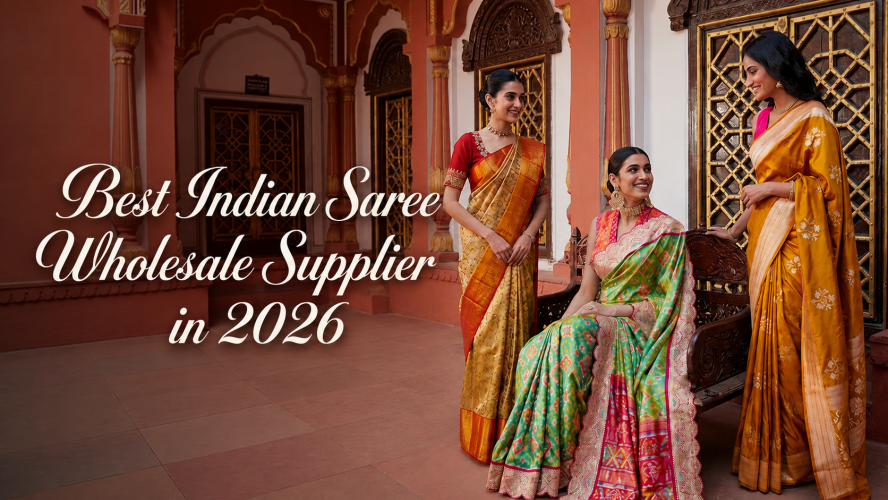
Finding the right Indian saree wholesale supplier is the single most important decision for any retailer, reseller, or franchise owner looking to build a profitable ethnic wear business. Whether you are sourcing for a boutique in the USA, a clothing store in the UAE, or launching a franchise in India, this guide covers every trusted supplier, city hub, saree type, pricing factor, and buying tip you need to know.
An Indian saree wholesale supplier is a business, manufacturer, or trader who sells sarees in bulk quantities typically at factory-direct prices to retailers, boutique owners, franchisees, and exporters.
They sit between the manufacturer (weaver or factory) and the end retailer. The best suppliers either manufacture in-house or maintain direct partnerships with weaving clusters across Surat, Varanasi, Kanchipuram, and Kolkata.
Unlike retail buyers, wholesale buyers enjoy significant price advantages, the ability to customize designs, and priority access to new seasonal collections before they hit the open market.
India is the world's largest producer and exporter of sarees, and no country can match its combination of variety, craftsmanship, and price.
Surat alone contributes over 40% of India's total synthetic fabric production, while cities like Varanasi, Kanchipuram, and Kolkata specialize in handloom and silk sarees that are unmatched globally.
When you source directly from an Indian saree wholesale supplier, you cut out multiple middlemen, which means lower cost per unit, higher profit margins, and exclusive designs that your competitors cannot easily duplicate.
India has several major textile hubs, each specializing in a distinct saree category. Understanding these markets helps you source smarter.
Surat, Gujarat is India's undisputed capital for synthetic, georgette, chiffon, digital print, and designer sarees. The Ring Road Textile Market and Silk City Textile Market are home to thousands of manufacturers and wholesalers operating on a B2B model.
Varanasi, Uttar Pradesh is the home of the world-famous Banarasi silk saree. The Banaras Handloom Company and dozens of registered weaving cooperatives here supply handcrafted silk sarees with zari work that command premium prices globally.
Kanchipuram, Tamil Nadu produces the iconic Kanchipuram silk saree, known for its heavy weight, contrasting borders, and pure mulberry silk a top seller for wedding and festive occasions.
Dharmavaram, Andhra Pradesh specializes in pure silk and cotton silk sarees with traditional patterns. These are sought-after for South Indian weddings and festivals.
Kolkata, West Bengal is a major hub for handloom cotton sarees especially Tant sarees, Baluchari, and Jamdani which are popular for everyday wear and gifting.
Ahmedabad, Gujarat (Sindhi Market, Ratan Pol) offers a mix of traditional Bandhani, Chaniya Choli, and block-printed sarees popular in both domestic and international ethnic wear markets.
These are verified, active suppliers with strong track records across domestic and international markets.
Ajmera Fashion is a premier designer saree manufacturer and exporter in Surat's Textile Market. They specialize in Banarasi, Georgette, Silk, and Printed Sarees, delivering to global wholesalers, boutiques, and B2B traders across USA, UK, Canada, and Australia. They are known for combining authentic Indian craftsmanship with contemporary designs at competitive factory prices.
Choosing the right saree type determines your target market, profit margins, and seasonal demand cycles.
Silk Sarees include Kanchipuram, Banarasi, Mysore Silk, Bhagalpuri Silk, and Tussar Silk. They command higher prices (₹1,500–₹25,000 wholesale) and are top performers for weddings and festive seasons.
Georgette & Chiffon Sarees are Surat's specialty lightweight, stylish, and available in digital prints and embroidery at affordable wholesale rates (₹300–₹2,000). They sell fast in boutiques and online stores.
Cotton Sarees (Tant, Jamdani, Sambalpuri, Chanderi) are popular in everyday wear segments and export markets like the UK and Canada where Indian diaspora customers prefer comfortable, breathable fabrics.
Embroidered & Designer Sarees with zari, sequin, stone work, or thread embroidery are premium products for party wear and bridal segments, with strong demand from USA and UAE markets.
Printed Sarees — block print, digital print, Kalamkari, Batik are among the fastest-moving SKUs at wholesale, especially for online reselling platforms like Amazon, Etsy, and Meesho.
The supplier you choose directly impacts your business quality, customer satisfaction, and cash flow. Here is what to evaluate.
Verify authenticity and registration. Always check if the supplier is GST-registered, has a physical address, and is listed on directories like Trade India, Textile Infomedia, or India Mart. Unregistered suppliers create tax and compliance problems, especially for export.
Check minimum order quantity (MOQ). Some suppliers require full catalog purchases (typically ₹5,000–₹25,000 per catalog), while others like Amrah Wholesale offer single-piece options. Match the MOQ to your storage capacity and cash flow.
Request samples before bulk ordering. A trustworthy Indian saree wholesale supplier will always provide samples. Fabric quality, colour fastness, stitching finish, and blouse quality should all be checked before placing a large order.
Evaluate shipping and return policies. For international buyers in the USA, UAE, or UK, verify whether the supplier handles export documentation (shipping bill, GST refund), offers track-and-trace logistics, and has a clear return or exchange policy.
Assess design refresh frequency. In 2026, saree trends shift every 4–6 weeks. A supplier who updates catalogs weekly (like Ajmera Fashion ) helps you stay competitive with fresh inventory.
This is one of the most under-covered topics in existing blogs — and a critical edge for international buyers and franchise owners.
For the USA and Canada, the Indian diaspora strongly prefers silk and designer sarees for occasions like Diwali, Navratri, weddings, and garba events. Georgette and Bollywood-style replica sarees also sell well. Suppliers like Ajmera Fashion and Heer Fashion Wholesale offer export-ready documentation and international logistics.
For the UAE and Gulf countries, heavy embroidered sarees, bridal sets, and party wear georgette sarees are in high demand due to a large South Asian expatriate community. Minimum order thresholds for export are typically ₹50,000 and above, and most serious suppliers offer WhatsApp-based catalog browsing for international clients.
For the UK, cotton sarees, Chanderi, and handloom varieties sell well alongside designer silk sarees. UK buyers must verify import duties (standard 12% on textile goods post-Brexit) and choose suppliers with Customs Invoice and COO (Certificate of Origin) capability.
Export Tip: Always source from suppliers with an IEC (Import Export Code) and GST registration. This qualifies you for GST refunds on exports and ensures clean customs clearance at the destination country.
Not every supplier listing on Google or IndiaMART is legitimate. Knowing the warning signs saves you from costly mistakes.
A supplier who refuses to share their GST number, physical address, or product samples before a large payment is a major red flag. Genuine Indian saree wholesale suppliers are transparent about their factory location and registration.
Be cautious of suppliers who offer prices significantly below market rates (e.g., Banarasi silk at ₹200) — this usually signals poor quality, blended fabrics falsely labeled as pure silk, or outright scam listings.
Avoid suppliers without a clear return or exchange policy. In wholesale, color variation, weaving defects, and packing damage do happen — a professional supplier will always have a defined claims process.
Finding the right Indian saree wholesale supplier in 2026 comes down to knowing your saree type, verifying supplier credentials, matching MOQ to your budget, and aligning your sourcing city to your product category. From Surat's bulk saree suppliers for georgette and printed styles, to Varanasi's Banarasi silk wholesale weavers and Kanchipuram's handloom specialists, India's textile ecosystem gives every buyer — domestic or international — the tools to build a high-margin saree business. Whether you need to buy sarees at wholesale price for a boutique in Dubai, source Indian ethnic wear wholesale for a franchise in the USA, or launch an online saree wholesale store in the UK, the suppliers, pricing benchmarks, and buying strategies in this guide will set you on the right path.
Q1. Who is the best Indian saree wholesale supplier in 2026?
Some of the best Indian saree wholesale suppliers in 2026 include Ajmera Fashion (Surat)The best choice depends on your saree type, order quantity, and target market (domestic vs. export).
Q2. Which city in India is best for buying wholesale sarees?
Surat is India's largest wholesale saree hub, especially for synthetic, georgette, and printed sarees. Varanasi is best for Banarasi silk sarees, and Kanchipuram is the top destination for pure silk wedding sarees.
Q3. What is the minimum order quantity for saree wholesale suppliers in India?
MOQ varies by supplier. Some Surat-based suppliers like Amrah Wholesale allow single-piece orders, while most catalog-based wholesalers require a minimum catalog purchase of ₹5,000–₹25,000. Export orders typically start at ₹50,000 or higher.
Q4. Can I buy wholesale sarees from India and export them to the USA or UK?
Yes. Suppliers like Heer Fashion Wholesale, Ajmera Fashion offer export-ready documentation, international shipping, and support for buyers in USA, UK, UAE, Canada, and other countries.
Q5. What is the wholesale price of sarees in India?
Wholesale saree prices in India start from as low as ₹200 for basic printed georgette sarees and go up to ₹30,000+ for pure Kanchipuram or Banarasi silk sarees. The average price for mid-range designer sarees is ₹500–₹2,500.
Q6. How do I verify if an Indian saree wholesale supplier is legitimate?
Check for GST registration, physical address, IndiaMART or TradeIndia listing, customer reviews, and willingness to provide product samples. Avoid suppliers who ask for full payment upfront without any verification process.
Q7. What types of sarees are best for international export?
Silk sarees (Banarasi, Kanchipuram), designer georgette sarees, embroidered party wear sarees, and cotton handloom sarees are top export performers. For the USA and Canada, festive and occasion wear sarees see the highest demand from Indian diaspora communities.
Q8. Can I source sarees online without visiting Surat?
Yes. Suppliers like Ajmera Fashion Company offer live video call buying facilities, and platforms like Amrah Wholesale and WholesaleCatalogz provide full digital catalogs with pan-India and international shipping.
Q9. What is the profit margin in wholesale saree reselling?
Domestic saree resellers typically earn 40–80% markup over wholesale prices. International exporters earn 100–200% markup depending on the destination country and product category. Premium silk sarees can yield even higher margins.
Q10. How often do wholesale saree collections get updated?
Top Surat-based suppliers update their catalogs weekly or bi-weekly to keep up with fast-changing fashion trends. Subscribing to WhatsApp or email catalog updates from your supplier ensures you always have access to the latest designs.

The classic suit is getting a girl-powered makeove...

Okay, let’s be real for a second. Scroll through...

Tights and leggings have gone from gym essentials ...
With trends changing at lightning speed, finding a...
We all know the struggle—trying to find a gown t...

Looking for the best Indian saree wholesale suppli...

