
If you've ever run a clothing store in North India, you already know the name. Gandhi Nagar Delhi cloth market isn't just a market; it's the place where small-town boutiques, city retailers, and online resellers fill their shops without blowing their budget. I've met shopkeepers from Meerut, Ambala, and Haridwar who make the trip every month. They tell me the same thing: "Yahan se maal lao, toh margin bachta hai."
But there's a side to this market that most visitors never see, and that's exactly what I want to share today. Along with a clear answer to the question everyone asks: What is Gandhi Nagar Delhi market famous for? I'll also show you a sourcing trick that can put an extra 20 to 40 percent back in your pocket on every order.
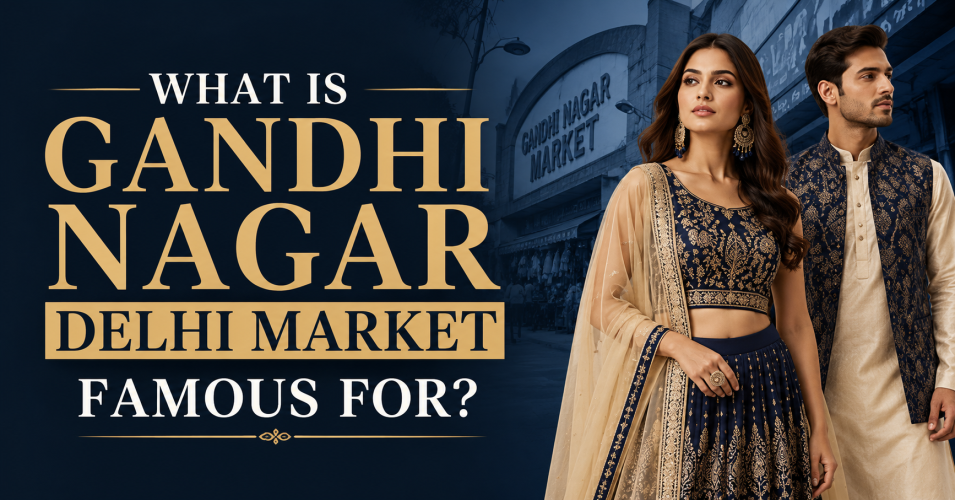
Let's answer this straight. Gandhi Nagar market is famous for being Asia's largest wholesale readymade garment market. It's where you go when you need kurtis, suits, lehengas, kids' wear, or fabrics at the lowest wholesale rates anywhere in North India.
Three things make it unbeatable. First, scale that actually saves you money. Over 12,000 shops operate here, packed into a well-planned grid. Because competition is so intense, sellers survive on razor-thin margins. For a retailer buying even 50 pieces, the per-piece price here is hard to match anywhere else in Delhi or even in India.
Second, fresh stock every week. The market moves at Bollywood speed. A trending design you saw on Instagram on Monday? You'll find something very close in Gandhi Nagar by Friday. The shops refresh their inventory constantly, so your store never looks stale.
Third, one trip fills your entire shop. Women's ethnic wear, men's casuals, children's party dresses, unstitched suit material, dupattas, even basic accessories. You can fill your entire store in a single visit. No running around the city.
This is why you'll see retailers from Punjab, Haryana, Uttar Pradesh, Rajasthan, and Uttarakhand lugging massive trolley bags through the market every single day. The market fuels India's small-town fashion economy.
People often pit Chandni Chowk against Gandhi Nagar. I've bought in both, and here's the truth: Gandhi Nagar is the largest cloth market in Delhi by trading volume and number of readymade garment shops.
Chandni Chowk is historic, chaotic, and sells everything from fabric to jewellery to electronics to spices. But if you specifically want finished garments like kurtis, suits, lehengas, and kids' wear at wholesale rates, Gandhi Nagar wins without question. It's bigger, more organized, and focused entirely on clothing.
The numbers speak for themselves. Over 12,000 dedicated garment shops. A daily footfall that crosses one lakh during wedding and festival season. An estimated daily turnover that runs into hundreds of crores. A grid layout with clearly marked blocks A, B, C, and D that makes sourcing far less painful than Chandni Chowk's narrow galis.
Next time someone asks which is the largest cloth market in Delhi, you can confidently say Gandhi Nagar, and add that it's officially recognized as Asia's biggest wholesale textile hub.
When people search for gandhi nagar cloth market in delhi, they usually mean what exactly can I buy there, and where do I find it. Here's a practical breakdown based on dozens of visits.
Blocks A and B form the heart of the market. This is women's ethnic wear territory. You'll find kurtis and kurtas in cotton, rayon, georgette, and modal with printed, embroidered, and solid styles. Salwar suits and dress materials come unstitched and semi-stitched in an overwhelming range of prints. Lehengas and ghagras span from budget party-wear to heavier bridal pieces. Sarees cover synthetic, chiffon, georgette, and some silk blends. Co-ord sets with kurti-palazzo and kurta-sharara combinations are the fastest-growing category right now.
Block C is dedicated to kids' wear. A separate section for children's ethnic and casual clothing including frocks, lehenga-style sets, kurta-pyjamas, and seasonal jackets, all at prices that let you retail competitively.
Block D covers men's wear and fabrics. Jeans, shirts, T-shirts, kurta-pyjama sets, and unstitched fabric sold by the metre. If your store caters to men as well, this section fills that gap.
Accessories and dupattas are scattered throughout the market. Small shops sell dupattas, stoles, laces, and borders that help retailers complete an outfit.
One thing you'll notice: almost every shop is a trader, not a manufacturer. The kurti you buy for a certain price probably left a factory in Surat for much less. The difference is the middleman's margin, and it's this margin that we'll tackle shortly with a direct manufacturer connection.
One of the reasons the gandhi nagar delhi cloth market thrives is its accessibility. It sits right at the Delhi-UP border, making it a natural hub for buyers from Ghaziabad, Noida, Meerut, and beyond.
The nearest metro station is Welcome on the Red Line, about one and a half kilometres away. A ten-minute auto ride drops you at the main entrance. The nearest railway stations are Old Delhi at seven kilometres and Anand Vihar Terminal at six kilometres. Anand Vihar ISBT is five kilometres away with buses from across North India. The market is well-connected to the Delhi-UP highway network by road.
The best time to visit is Tuesday to Thursday at 10:30 in the morning. You'll avoid the weekend madness, and shops are freshly stocked. If you're a first-timer, avoid the month before Diwali or wedding peak. It gets incredibly crowded.
First, decide your budget and quantity upfront. Wholesale rates unlock only when you buy in volume. Know how many pieces per design you can afford before you walk in.
Second, compare at least five to six shops. The same design often appears at multiple shops with a price difference of 50 to 150 rupees. Spend an hour just walking and noting prices.
Third, inspect quality immediately. Check for loose threads, uneven stitching, and colour consistency. Returns are rare, so you must catch defects before paying.
Fourth, insist on a GST bill. A legitimate wholesaler will always give one. It protects your input tax credit and provides legal purchase proof.
Fifth, cash can give you an edge. While UPI is everywhere, a cash offer sometimes unlocks a slightly better rate.
Sixth, remember the middleman math. Every garment here carries at least two to three layers of margin. Keep that in mind when you calculate your final selling price.
Let's pull back the curtain on the supply chain. The journey of a typical kurti sold here looks like this. A manufacturer in Surat produces the kurti. A Surat trader buys it, adds his margin, and sells it to a Delhi distributor. The Delhi distributor adds another margin and supplies the Gandhi Nagar shop. The Gandhi Nagar shopkeeper adds his final margin and sells it to you.
By the time you buy that piece, you've paid for three or four profit layers. That's not a flaw. It's just how wholesale trading works. But it doesn't mean you have to accept it as the only way.
This is where Ajmera Fashion Limited comes in. A name that has been quietly serving smart retailers for 34 years from Surat, the very city where most of Gandhi Nagar's stock originates.
Imagine being able to walk into the very factory that supplies the traders, and buy at the same price they pay or better. That's what we offer. Ajmera Fashion Limited is not a middleman. We are a manufacturer with 34 years of experience, running in-house weaving, dyeing, printing, embroidery, and stitching units under one roof in Surat.
We're not a new name trying to gain trust. We run 250-plus Ajmera Trends franchise stores across India, proof that our designs sell successfully at retail. We export to more than 30 countries, meaning our quality passes international standards. And we serve over 2,500 wholesale buyers directly, without any trader margins.
When you source from us, you skip the Surat trader, the Delhi distributor, and the market shopkeeper. You pay the ex-factory rate, the goods ship to your address anywhere in India, and you get a GST-compliant bill. We even offer a live video call so you can inspect the actual products before paying. That's the kind of transparency no market shop can provide.
For designer kurtis, the Gandhi Nagar trader price includes multiple middleman margins. Ajmera Fashion Limited offers ex-factory rates that are 20 to 40 percent lower with the same or better quality. For cotton suits, the market price includes distributor margin, while we provide direct manufacturer pricing with consistent fabric quality. For party-wear lehengas, the market marks up at each stage, while we produce in-house embroidery at factory pricing. For co-ord sets, multiple margins are added in the market, while our coordinated production comes at genuine wholesale rates. For synthetic sarees, the Surat-to-Delhi markup is significant, while our Surat factory-direct model has zero middlemen.
The difference is simple. The market offers convenience and variety in one trip. The factory offers sustainably higher margins. Smart retailers I know use both. They visit Gandhi Nagar for quick variety and small fills, but place all their bulk, repeatable, margin-sensitive orders directly with Ajmera Fashion.
What is Gandhi Nagar Delhi market famous for?
It's famous as Asia's largest wholesale readymade garment market, offering unmatched variety and competitive wholesale pricing on women's ethnic wear, kids' clothing, men's casuals, and fabrics.
Which is the largest cloth market in Delhi?
Gandhi Nagar Market is the largest by trading volume and number of readymade garment shops. It surpasses Chandni Chowk in garment trade and is recognized as Asia's biggest wholesale textile hub.
What is the clothes market in Gandhi Nagar?
It's a grid of over 12,000 wholesale shops selling kurtis, suits, lehengas, sarees, kids' wear, men's wear, and unstitched fabrics at bulk rates.
Can I source directly from a manufacturer instead of the market?
Yes. Ajmera Fashion Limited offers factory-direct ethnic wear with digital catalogues, video verification, GST billing, and PAN-India delivery, eliminating all middlemen.
How does buying from a factory save money?
By removing the Surat trader, Delhi distributor, and market shopkeeper from the chain, you pay the ex-factory rate, which is typically 20 to 40 percent lower than market wholesale prices.
Can I see the products before ordering?
Absolutely. We offer live video calls from our Surat factory so you can inspect the exact garments before committing a single rupee.
The gandhi nagar delhi cloth market is an institution, and I respect the hard work of every shopkeeper there. But if your goal is to build a profitable, sustainable clothing business, you need to look beyond the market lanes to the source.
That source is Surat, and the most reliable door to it is Ajmera Fashion Limited. With 34 years of manufacturing excellence, an in-house production line, 250-plus successful franchise stores, and exports to more than 30 countries, we are the factory partner that can double your margins over time.
Stop paying for middlemen. Start sourcing from the people who actually make the clothes.
📞 WhatsApp: +91-884-942-9440
📧 Email: info@ajmerafashion.com

Complete retailer guide to the top wholesale cloth...

Insider guide to the New Cloth Market Surat – wh...

Explore Pantheon Street cloth market Chennai Tamil...

Complete insider guide to Gandhi Nagar Delhi cloth...

Complete retailer guide to the top wholesale cloth...

Comprehensive ranking of Asia's top 10 larges...

