
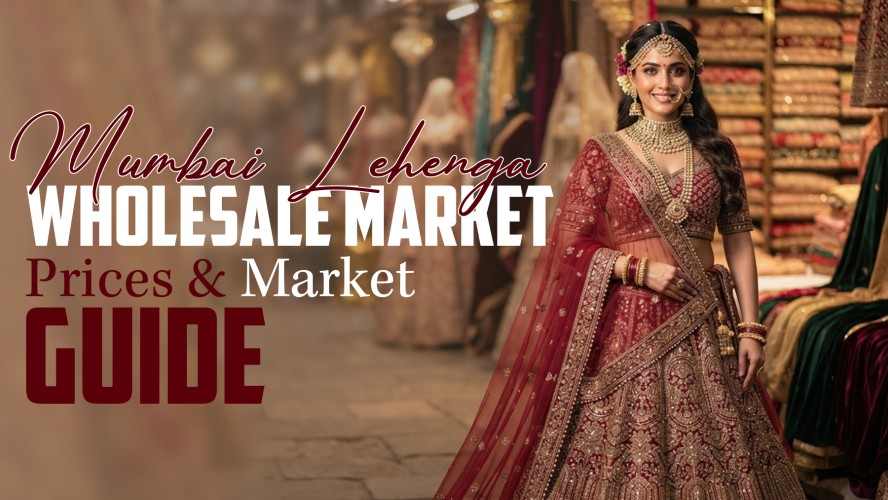
The Mumbai lehenga wholesale market is spread across several established textile and garment trading areas, mainly Bhuleshwar, Kalbadevi, Mangaldas Market, Dadar and Santacruz. These locations serve retailers, boutique owners and wedding shoppers who need lehengas in bulk or at wholesale-friendly prices. Buyers who prefer a branded wholesale option can also contact Ajmera Fashion Limited for lehenga wholesale requirements. This guide explains the main market areas, the types of lehengas available, the buying process and the practical points to check before placing an order.
Mumbai lehenga wholesale market refers to the cluster of wholesale garment shops, fabric traders and ethnic wear suppliers located mainly in South Mumbai and key suburban commercial zones. It is not one single market but a collection of trading streets and market buildings that have built a reputation for bridal wear, festive lehengas and readymade ethnic clothing. Many shops deal directly with manufacturers from Surat, Delhi and Jaipur, which gives Mumbai buyers access to a broad mix of fabrics, embroidery styles and price points. The market is used by both local retailers and outstation buyers who visit Mumbai specifically to source lehengas for their shops or wedding businesses.
Bhuleshwar and Kalbadevi are among the most frequently searched areas for ethnic wear wholesale in Mumbai. These dense South Mumbai markets have numerous shops and small trading firms that keep lehengas, sarees, dress materials and bridal accessories. Because the area is old and compact, buyers usually need to walk through narrow lanes and compare several shops before finalising a purchase. The advantage of Bhuleshwar and Kalbadevi is the sheer variety of traditional lehengas, including heavily embroidered bridal pieces, zari work and festive designs.
Mangaldas Market is a well-known wholesale textile market located near Kalbadevi and Crawford Market in South Mumbai. It is historically associated with fabric trading, but many shops inside and around the market also sell readymade lehengas, semi-stitched lehenga sets and matching blouses. Buyers often visit Mangaldas Market when they want to see fabric options first and then select a readymade or stitched lehenga design. The market is busiest during wedding season and before major festivals, so weekdays and early mornings are better for serious wholesale buying.
Dadar West and parts of Santacruz are useful additions for buyers who do not want to spend all their time in South Mumbai. Dadar has a strong retail and semi-wholesale ethnic wear presence, with many shops selling lehengas for festive and wedding occasions. Santacruz, especially around the main market area, is known for boutique-style lehengas, designer-inspired pieces and lighter party-wear designs. These locations are easier to navigate than Bhuleshwar and Kalbadevi, and they can be good for buyers looking for mid-range wholesale lehengas without entering the most crowded old city lanes.
The Mumbai lehenga wholesale market offers a wide variety of readymade, semi-stitched and customised lehengas. Bridal lehengas are strongly represented in Bhuleshwar and Kalbadevi, where heavy zari, stone work, sequins and hand embroidery are common. Party-wear lehengas, engagement outfits, sangeet lehengas and reception styles are available in most markets, often in fabrics such as georgette, net, velvet, silk and organza. Mumbai shops also keep a large selection of lightweight and Indo-Western lehengas because the city has strong demand for contemporary festive fashion. For buyers who want fabric and stitching separately, Mangaldas Market and the surrounding textile lanes provide unstitched lehenga material along with trims, borders and linings.
Before entering the Mumbai wholesale markets, a buyer should be clear about the fabric, occasion, quantity, size range and budget. Knowing whether you need readymade lehengas, semi-stitched sets or only fabric helps you shortlist the right market area. Boutique owners and retailers should also know their target selling price so they can compare wholesale rates more quickly. Without this clarity, the volume of products in Mumbai can become overwhelming and waste valuable buying time.
Wholesale rates in Mumbai depend heavily on the number of pieces, the fabric, the embroidery and the supplier. Many shops quote retail prices to first-time visitors and offer wholesale pricing only when the order crosses a minimum quantity. It is normal to compare three to five shops before settling on a supplier, especially for bridal and heavy lehengas. Always ask for the minimum order quantity in the first conversation, because this can vary from one shop to another even within the same market lane.
Fabric quality in Mumbai’s wholesale markets can differ significantly even when two lehengas look similar. Buyers should check the reverse side of the embroidery, the lining, the hem, the fall and the stitching near the waist and seams. For readymade lehengas, confirm whether the blouse piece and dupatta are included in the quoted rate. For semi-stitched or customised lehengas, ask about stitching charges, fitting sessions and delivery time.
Once the design and price are final, ask for a written quotation or invoice that clearly mentions the product details, quantity, per-piece rate, GST, delivery date, advance amount and balance amount. A written record is especially important for outstation buyers who cannot physically follow up after leaving Mumbai. Avoid paying the full amount in advance unless the supplier is verified or already known to you. The invoice should also mention the return or exchange policy, because many wholesale transactions do not allow easy returns after the goods leave the counter.
For buyers who want a branded and more structured wholesale experience, Ajmera Fashion Limited can be a practical option. The brand is associated with ethnic wear and wholesale fashion, and buyers can contact Ajmera Fashion Limited directly to ask about its lehenga collection, minimum order quantity, price range and delivery process. This route is useful when a buyer cannot visit the crowded Mumbai markets or wants a fixed quotation and proper billing. It is important to confirm the current catalogue, available fabrics and order terms through the official website or verified business contact before committing to a purchase. Buying wholesale lehengas from Ajmera Fashion Limited can work well for boutique owners and retailers who prefer a brand-backed supply source, but the final decision should still be based on the actual product range and terms shared by the company.
Mumbai, Delhi and Surat each serve different needs in the lehenga wholesale trade. Delhi’s Chandni Chowk is stronger in heavy traditional bridal lehengas, zari work, stone work and hand embroidery. Surat is stronger in synthetic fabrics, lightweight lehengas, readymade styles and budget-friendly bulk manufacturing. Mumbai sits between these two strengths, with a strong retail-driven market, good access to bridal and festive lehengas, and a wide selection of contemporary and party-wear designs. A buyer looking for pure budget bulk production may prefer Surat, while a buyer seeking traditional bridal embroidery may prefer Delhi. Mumbai is often chosen for its mix of styles, better travel connectivity and a market culture that suits boutique owners who buy in smaller wholesale quantities.
Mumbai’s wholesale markets remain active throughout the year, but demand rises sharply before Diwali, wedding season and major festivals. Buyers who need stock for a specific season should plan at least two to three months in advance so there is enough time for stitching, embroidery and delivery. Weekdays are generally better than weekends because the markets are less crowded and shopkeepers have more time to show stock. Early morning visits are recommended for Bhuleshwar, Kalbadevi and Mangaldas Market because the lanes become congested later in the day.
A common mistake is entering the market without a fixed budget and minimum order quantity, which leads to confusion and wasted time. Another mistake is comparing only the per-piece price without checking fabric weight, lining, stitching finish and the inclusion of blouse and dupatta. Some suppliers reduce the visible price by using lighter fabric or lower-quality lining. Buyers should also avoid finalising an order at the first shop they visit, because the same or similar design is often available nearby at a lower rate. Finally, not confirming delivery time and return terms in writing can create problems after the buyer leaves Mumbai.
The main Mumbai lehenga wholesale market is spread across Bhuleshwar, Kalbadevi and Mangaldas Market in South Mumbai, with additional options in Dadar and Santacruz. These areas have wholesale shops and suppliers dealing in bridal, festive and readymade lehengas for bulk buyers.
Bhuleshwar and Kalbadevi are generally the strongest areas for traditional bridal lehengas in Mumbai. These markets have a high concentration of shops with heavy zari, stone work, sequins and hand-embroidered bridal designs. Mangaldas Market is also useful for fabric and semi-stitched bridal options.
Minimum order quantity varies from shop to shop. Many Mumbai wholesalers offer better rates on three to six pieces or more, but some shops also sell single pieces at retail-friendly prices. Buyers should ask about the minimum order before beginning serious price negotiation.
Mumbai is not always cheaper than Delhi. Delhi’s Chandni Chowk often has stronger price competition for heavy bridal lehengas, while Mumbai offers a broader mix of contemporary and party-wear designs. The final price depends on the fabric, embroidery, quantity and supplier.
Yes, buyers can contact Ajmera Fashion Limited to ask about wholesale lehenga availability, minimum order quantity, pricing and delivery. It is best to use the official website or verified business contact to confirm the current collection and terms before placing an order.
Mumbai wholesale markets stock bridal lehengas, party-wear lehengas, sangeet outfits, reception lehengas, lightweight festive styles and Indo-Western designs. Fabrics commonly include georgette, net, velvet, silk, organza and blended materials, with both readymade and semi-stitched options available.
Check the fabric quality, lining, embroidery finish, stitching, hem and fall. Also confirm the inclusion of blouse and dupatta, minimum order quantity, per-piece wholesale rate, GST, delivery date and return or exchange policy. Always get a written invoice before making an advance payment.
Mumbai lehenga wholesale market offers a strong mix of bridal, festive and contemporary lehengas for retailers, boutique owners and bulk buyers. Bhuleshwar, Kalbadevi and Mangaldas Market remain the core South Mumbai sourcing zones, while Dadar and Santacruz provide useful alternatives. The most successful buying approach is to compare multiple shops, check fabric and stitching carefully, and secure a written invoice before paying. If you prefer a branded supply option, contact Ajmera Fashion Limited directly and confirm its current wholesale lehenga range and order terms. This practical planning can make Mumbai sourcing more efficient and financially safer.
Delhi Lehenga Wholesale Market: Best Shops, Prices & Ajmera Fashion Chandni Chowk Guide
Surat Lehenga Wholesale Market: Buying Guide for Retailers & Ajmera Fashion

Find the best wholesale clothing suppliers in Indi...

A practical guide for wholesale buyers comparing t...

Explore Mumbai lehenga wholesale market areas, ava...

Explore Surat lehenga wholesale market areas, avai...
Complete guide to Delhi's lehenga wholesale m...

Find factory direct wholesale clothing in India fo...

