
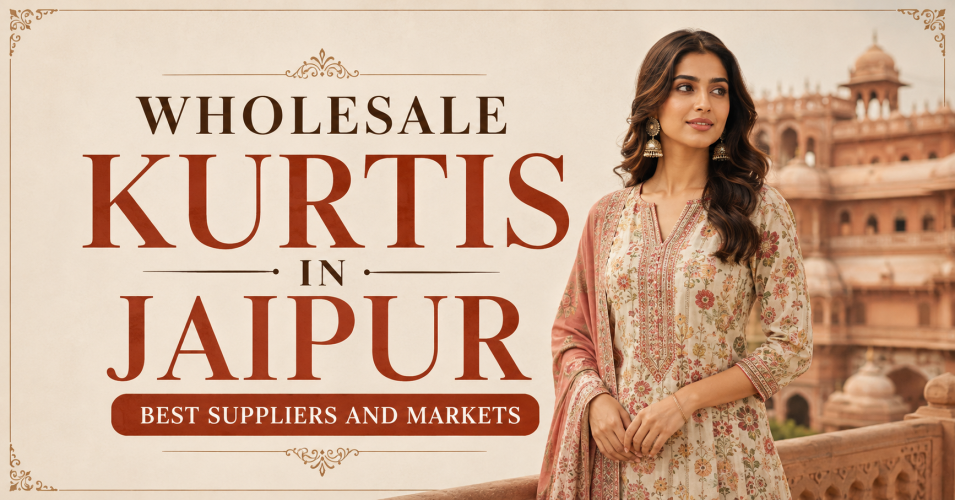
Jaipur is one of the important sourcing destinations for wholesale kurtis in India, particularly for buyers looking for Jaipuri prints, cotton kurtis, block-print designs, rayon styles and traditional Rajasthani patterns. However, Jaipur does not operate as one single wholesale kurti market. Different commercial areas serve different product requirements, so retailers should choose the sourcing location according to the type of kurtis they want to stock.
For buyers who cannot travel to Jaipur, an online B2B supplier can be a practical alternative. Ajmera Fashion Limited, a Surat-based textile manufacturer and wholesale supplier, offers kurtis online for retailers, boutiques, resellers and other B2B buyers, including Jaipuri-style and other women's kurti collections.
Wholesale kurtis in Jaipur can be sourced through several markets and textile areas rather than one centralized wholesale complex. Bapu Bazaar, Hawa Mahal, Chandpole and Sanganer are among the areas associated with different types of ethnic clothing and textile products. Sanganer is particularly relevant when the buyer is looking for block-print and traditionally printed products, while central Jaipur markets offer finished garments and mixed ethnic-wear collections.
The right market depends on whether you need finished Jaipuri kurtis, printed cotton styles, designer kurtis or products with traditional Rajasthani printing.
Bapu Bazaar is a well-known shopping area in Jaipur with a strong presence of traditional Rajasthani clothing and printed products. Wholesale buyers can find finished kurtis and other ethnic-wear products, although buyers should distinguish between retail-oriented shops and suppliers willing to offer genuine bulk rates.
It can be useful for buyers who want to physically compare designs and understand the local market before placing larger orders.
The area around Hawa Mahal and Badi Choupad is another sourcing zone where buyers can find Rajasthani garments, including Sanganeri-style printed kurtis. Current local market guides identify this area with block prints and traditional kurti styles.
For a retailer, the advantage is the ability to compare multiple designs in one trip. The disadvantage is that product quality, pricing and wholesale terms can vary considerably between individual sellers.
Sanganer is particularly important for buyers interested in traditional block printing and textile production. Rather than simply looking for finished garments, buyers can explore the broader production ecosystem behind Jaipuri and Sanganeri textiles.
If your store's USP is authentic-looking printed ethnic wear, Sanganer can be a more relevant sourcing area than a general retail market.
Chandpole is another Jaipur commercial area where buyers can find mixed textile and ethnic-wear products. It can be useful when you want to compare kurtis with other garments rather than source only one specific product category.
However, always confirm whether a seller is operating as a manufacturer, wholesaler or retailer before assuming that the displayed price is a bulk price.
Jaipur's kurti market is particularly associated with printed and ethnic styles, but the wholesale selection is broader.
Retailers can encounter cotton kurtis, Jaipuri printed kurtis, Sanganeri block-print kurtis, rayon kurtis, georgette kurtis, embroidered kurtis, Anarkali kurtis, straight-cut kurtis and designer styles.
The right selection depends on the customer base. A store targeting everyday ethnic wear may require breathable cotton and simple prints, while a boutique may prefer embroidered, designer or contemporary silhouettes.
Jaipuri kurtis are popular because they bring recognizable regional print aesthetics into everyday women's fashion.
When sourcing them wholesale, retailers should look beyond the label “Jaipuri.” Ask about the fabric, printing method, garment construction and whether the design is actually produced using the technique being claimed.
Ajmera Fashion also offers a dedicated wholesale Jaipuri kurti collection using fabrics including cotton, rayon, georgette and silk blends. Its published product information positions the collection for retailers and business buyers.
Cotton kurtis are useful for retailers serving customers who prioritize comfort and everyday wear.
The quality of cotton kurtis can vary significantly depending on fabric weight, weave, finishing, dyeing and stitching. A lower quoted price does not necessarily represent better value if the fabric shrinks, colours fade or stitching quality is inconsistent.
For wholesale buying, request fabric details and inspect samples before committing to a large collection.
Designer kurtis can include embroidery, unusual necklines, contemporary cuts, decorative sleeves, digital prints and other fashion elements.
These products can offer better retail margins when the design is differentiated, but they also require more careful quality checking.
Ajmera Fashion's current wholesale designer kurti collection includes A-line, Anarkali, straight-cut and asymmetrical designs, with fabrics such as cotton, rayon, silk, chiffon, georgette and blended fabrics.
There is no single wholesale kurti price in Jaipur.
The price changes according to fabric, printing technique, embroidery, design complexity, quantity and supplier.
Current supplier listings illustrate the variation. For example, Bagru Factory currently lists wholesale kurtis from ₹250 per piece, while other suppliers use different pricing structures and minimum quantities.
Retailers should therefore compare equivalent products rather than choosing a supplier solely because its headline price is lower.
For a useful calculation, include GST, transportation and other procurement costs when calculating your final landed cost.
MOQ varies significantly between suppliers.
Some suppliers accept relatively small quantities per design, while manufacturers may require a higher minimum order or minimum order value.
For example, one current Jaipur-focused supplier advertises an MOQ of 100 pieces, while another wholesale supplier lists 6–12 pieces per design.
Ajmera Fashion's current designer kurti page lists a minimum order value of ₹30,000.
Always confirm the current MOQ for the exact catalogue you want rather than assuming that every product from a supplier follows the same requirement.
There is no universal answer.
A Jaipur-based supplier can be useful when your priority is traditional Jaipur craftsmanship, local prints and the ability to visit several businesses physically.
A direct manufacturer can be more practical when your priority is repeat supply, multiple categories, centralized ordering and online B2B sourcing.
For example, a retailer looking specifically for authentic local block-print products may benefit from visiting Sanganer, while a retailer wanting kurtis alongside sarees, lehengas and other ethnic wear may prefer a broader manufacturer catalogue.
Yes.
Online B2B sourcing can be particularly useful for retailers outside Rajasthan. Instead of spending money on travel and market visits, buyers can shortlist catalogues online, request product information and discuss wholesale terms remotely.
Ajmera Fashion provides online wholesale kurti sourcing and has a dedicated Jaipur/Jaipuri kurti catalogue. Its current pages include categories such as ethnic, chiffon, georgette, rayon, Kashmiri, polyester, printed, silk and embroidered kurtis.
For online wholesale purchases, ask for current photographs, product codes, fabric information, availability and applicable wholesale terms before confirming the order.
Ajmera Fashion Limited is not a Jaipur-based supplier; it is a Surat-based textile manufacturer and B2B wholesaler. That distinction is important.
However, Jaipur retailers do not necessarily need to source every product from a Jaipur business. Ajmera Fashion provides wholesale kurti collections online and has a dedicated Jaipur-focused page, allowing retailers to source without physically visiting Jaipur.
Its designer kurti collection includes cotton, rayon, silk, chiffon, georgette and blended fabrics, with styles such as A-line, Anarkali, straight-cut and asymmetrical kurtis. The current product page lists a ₹30,000 minimum order value.
For a retailer who wants a broader B2B clothing supplier rather than only Jaipur-specific products, this can be a practical alternative.
Do not choose a supplier based only on the phrase “best wholesale supplier.”
First identify the products your customers actually buy. Then compare fabric, stitching, print quality, sizing, colour consistency and finishing.
After that, compare the commercial terms: wholesale price, MOQ, GST billing, payment conditions, dispatch, transport and replacement policy.
Finally, consider repeat supply. A supplier that can provide new collections consistently can be more valuable than one offering a very low price on a single order.
Before placing a bulk order, check the fabric specification and garment measurements.
For printed kurtis, inspect print clarity and colour consistency. For embroidered kurtis, check threadwork and finishing. For cotton products, ask about fabric type and shrinkage where relevant.
Confirm whether sizes can be mixed within an order and whether the supplier can replenish successful designs.
For online purchases, request actual product photographs or videos if the catalogue images do not provide enough detail.
Also confirm GST billing and shipping charges before finalizing the order.
Physical market sourcing provides one major advantage: you can inspect products directly.
Online sourcing provides a different advantage: convenience and repeatability.
A retailer based in Jaipur may find it efficient to visit local markets initially, compare suppliers and understand the local price structure. Once the preferred supplier relationship is established, online ordering can reduce the need for repeated market visits.
For retailers outside Jaipur, an online B2B supplier may be the more efficient starting point.
A retailer does not necessarily need a supplier in the same city.
What matters is whether the supplier can provide the right product, quantity, documentation and delivery service.
Ajmera Fashion's current kurti pages are positioned for retailers across India and include multiple women's kurti categories. The company also publishes its wholesale contact details for business enquiries.
This makes it an option for Jaipur retailers who want to compare local sourcing with a manufacturer-backed online B2B supplier.
If you are looking for wholesale kurtis for a retail store, boutique, online business or distribution operation, Ajmera Fashion can provide its current product catalogue and wholesale information directly.
For wholesale orders, product catalogues, pricing and enquiries within India, contact the Ajmera Fashion team:
Phone / WhatsApp: +91 884 942 9440
Email: info@ajmerafashion.com
The team can assist with product selection and wholesale requirements.
Wholesale kurtis can be sourced through several Jaipur areas, including Bapu Bazaar, Hawa Mahal and Sanganer. The best location depends on the product: Sanganer is particularly relevant for block-print textiles, while central markets offer finished ethnic-wear collections.
There is no single market that is best for every buyer. Sanganer is useful for printed and block-print sourcing, while Bapu Bazaar and Hawa Mahal offer finished Rajasthani and ethnic-wear options. Retailers should compare suppliers according to their required product category.
Jaipuri kurtis can be sourced from Jaipur's textile and ethnic-wear markets as well as online B2B suppliers. Sanganer is particularly relevant for traditional block-print sourcing. Ajmera Fashion also offers a dedicated wholesale Jaipuri kurti collection online.
Common wholesale categories include cotton, Jaipuri printed, Sanganeri block-print, rayon, georgette, embroidered, Anarkali, straight-cut and designer kurtis.
There is no fixed wholesale price. Current supplier listings show different price points based on fabric, design and quantity. One current Jaipur supplier advertises prices starting at ₹250, but retailers should compare equivalent products before deciding.
MOQ depends on the supplier. Current listings range from small quantities per design to 100 pieces or more. Ajmera Fashion's current designer kurti page lists a ₹30,000 minimum order value.
Yes. Online B2B sourcing allows retailers to review catalogues, request product information and arrange wholesale orders remotely. This can be especially useful for retailers located outside Rajasthan.
Yes. Ajmera Fashion has a dedicated Jaipur kurti offers multiple wholesale kurti categories to business buyers. The company is based in Surat rather than Jaipur.
Best Places to Buy Wholesale Kurti in India – Complete Buying Guide
Designer Kurtis Wholesale Supplier Surat – Starting ₹99 | Ajmera Fashion Limited
Jaipur Saree Wholesale Market: A Practical Guide for Retailers & Bulk Buyers
Find the top kurtis manufacturers in Surat for who...
Explore wholesale kurtis in Ahmedabad through Revd...
Explore wholesale kurtis in Delhi through Gandhi N...
Explore wholesale kurtis in Jaipur, including Jaip...

Find the best wholesale clothing suppliers in Indi...

A practical guide for wholesale buyers comparing t...

