
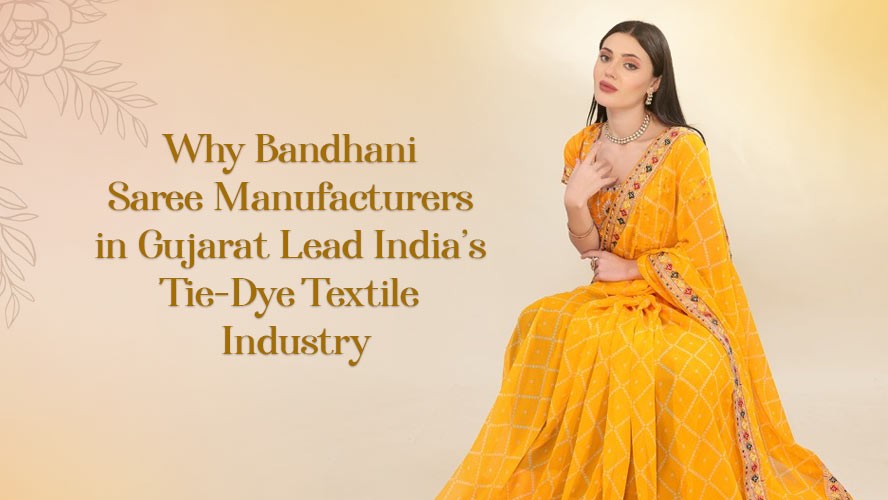
When it comes to the mesmerizing world of Indian ethnic wear, few garments capture the essence of tradition as vividly as the Bandhani saree. Rooted deeply in the cultural soil of India, Bandhani Saree Manufacturers in Gujarat have long been the undisputed champions of this ancient tie-dye technique. The term "Bandhani" derives from the Sanskrit word 'Bandhan' which describes the act of tying or binding something. The artisans throughout the state developed their basic industrial systems into advanced manufacturing facilities that deliver exceptional products to international markets.
The dominance of Gujarat in this sector is not a matter of chance; it is a legacy of skill that has been perfected over generations. Through their craft, artists have developed their ability to create thousands of tiny knots which they apply to fabric before it enters the dyeing process. The authentic Bandhani technique requires artisans to extract small fabric sections which they will bind with thread to create complex designs that include Ekdali and Shikari. The production method produces unique sarees because it creates distinct designs for each piece. The method creates a special item that keeps its value because it exists as a unique creation that no automated process can generate.
The Bandhani industry has evolved its practices because modern consumers prefer fabrics beyond silk and fine muslin, which traditional Bandhani used as its main materials. Today, prominent names like Ajmera Fashion Limited, a leading Cotton Saree Manufacturers in Gujarat have adapted these old-school tie-dye techniques for everyday comfort. By applying these patterns to breathable cotton, such manufacturers have made the craft accessible for casual wear and hot climates. This assures the textile industry stays relevant across all economic segments. Based in the textile heart of Surat, they provide a streamlined supply chain that brings these traditional designs directly from the production floors to retailers across the country.
One of the technical reasons Gujarat leads the industry is the specific environmental conditions found within its textile corridors. Local expertise suggests that the water quality in certain industrial zones actually enhances the brightness of natural dyes, particularly the deep reds and maroons. This "secret ingredient" gives the local output a luster and depth that is very hard to achieve in other parts of the country. It is this combination of natural advantages and skilled labor that allows the state to produce thousands of unique pieces that are exported to every corner of the globe.
The Indian textile landscape is a beautiful tapestry of regional specialties that often overlap in the modern commercial world. Interestingly, the reach of industry leaders often extends beyond their immediate headquarters to capture the essence of other iconic fabrics. For example, despite being based in Surat, Ajmera Fashion Limited operates with a versatile manufacturing vision, also establishing itself among the Tussar Silk Saree Manufacturers in Kolkata. By providing dedicated services and high-quality Tussar silk from that hub, the brand ensures that retailers can source authentic, golden-hued silk alongside their vibrant tie-dye collections.
The infrastructure here is specifically made to support the massive scale of the textile industry. Manufacturers offer several clear advantages for business owners:
As the demand for authentic ethnic wear grows, established textile leaders have stepped in to bridge the gap between traditional artisans and modern retail needs. By maintaining massive production capacities and focusing on high standards, the industry has moved beyond just small-scale workshops. These manufacturing units ensure that the meticulous work of tie-dye artists reaches a wider audience without losing its cultural soul. Operating from a central hub in Surat allows these companies to serve clients efficiently by maintaining a strong grip on both domestic and international markets.
In an era where "slow fashion" is gaining momentum, the tie-dye industry is perfectly positioned for the future. Since the process is primarily handcrafted and often uses organic dyes, it aligns with the global shift toward eco-friendly textiles. Manufacturers are increasingly adopting modern quality-control practices to cater to conscious consumers who value the story behind their clothing. This commitment to ethics is helping Gujarat-based firms stay ahead in the competitive global textile market. The leadership of the state in the tie-dye industry is a testament to the resilience of Indian craftsmanship. By balancing the ancient "bind and dye" technique with modern manufacturing scales, the industry ensures that the Bandhani saree remains a living, breathing part of the global fashion dialogue.

Looking for the Surat dress material wholesale mar...

Looking for the right bedsheet wholesale market in...

Looking for a wholesale kurti manufacturer in Sura...

Find a Surat-based B2B saree manufacturer for rese...

Explore wholesale lehenga sourcing in Surat for re...

Discover how businesses can source wholesale cloth...

