
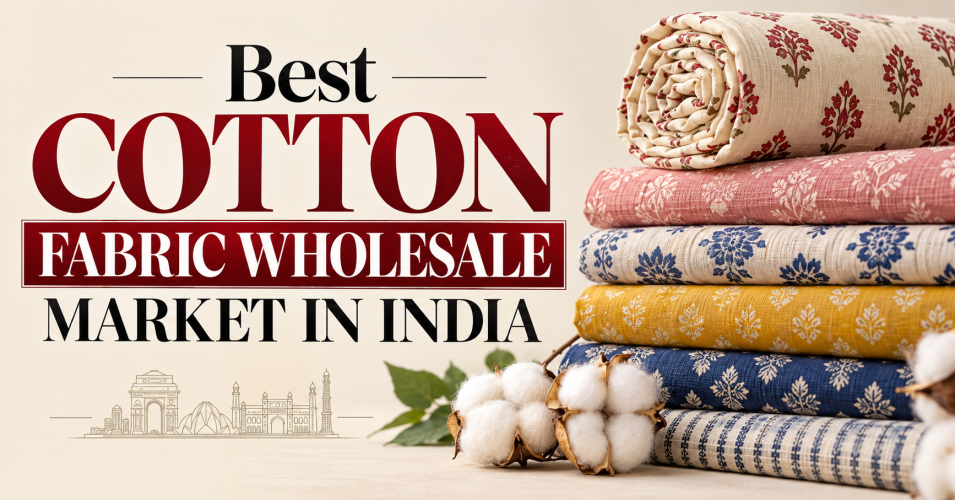
Finding the best cotton fabric wholesale market in India requires more than comparing prices. Garment manufacturers, fabric retailers, boutique owners, fashion brands and textile distributors need to consider fabric quality, composition, weaving, available quantities and the reliability of their suppliers before placing bulk orders.
India has several important cotton-textile sourcing destinations. Ahmedabad has a long-established cotton textile industry, Erode is known for cotton trading and woven textiles, Coimbatore has a strong textile manufacturing ecosystem, and Ichalkaranji is associated with powerloom fabrics. Other destinations offer printed cotton, traditional handloom textiles and cotton-based home furnishings.
The right market depends on whether you need plain cotton fabric, printed cotton, cotton poplin, shirting material, dress fabric, handloom cotton or cotton fabric for home textiles.
This guide explores 10 Indian textile markets and sourcing hubs worth considering when buying cotton fabric wholesale. It explains what each destination is known for, which buyers may benefit from it, and how to evaluate suppliers before making a commercial purchase.
Ahmedabad is one of India's established cotton-textile centres, with a long history of cotton spinning, weaving, processing and fabric trading. New Cloth Market is a recognised wholesale textile trading destination where buyers can explore different cloth and textile categories.
For businesses searching for cotton fabric wholesale in India, Ahmedabad is a useful starting point because of its wider textile ecosystem. Depending on the supplier, buyers may find cotton fabrics, woven materials, dress materials, shirting fabrics and blended textiles.
Cotton fabric requirements vary significantly by application. A garment manufacturer producing shirts may need a different fabric construction from a business manufacturing kurtis, dresses, uniforms or children's clothing. Buyers should therefore specify the intended use before comparing quotations.
When purchasing from Ahmedabad, ask about fibre composition, fabric width, weight, weave, shrinkage and colourfastness. These factors help determine whether the material will perform as expected during cutting, stitching, washing and regular use.
Why Ahmedabad is famous: Cotton-textile trading, woven fabrics, textile manufacturing and a long-established textile industry.
Best suited for: Cotton fabric wholesalers, garment manufacturers, fabric retailers, uniform suppliers and clothing businesses.
Erode is an important textile trading destination in Tamil Nadu, with connections to cotton weaving, powerloom production and the wider textile industry of the region. The E.K.M. Abdul Gani Textile Market, commonly known as Gani Market, is one of the city's recognised textile trading centres.
Buyers exploring Erode can investigate cotton fabrics, woven textiles, dress materials, sarees and other cotton-oriented products. The wider textile ecosystem also supports businesses looking for materials for apparel and home-textile applications.
Erode is particularly relevant for buyers who need to compare cotton-based products rather than focus exclusively on synthetic fashion fabrics. However, individual suppliers may specialise in different products, so the exact fabric category should be confirmed before visiting or placing an order.
For bulk purchases, check whether the quoted material is grey fabric, processed fabric, printed fabric or finished fabric. These are not interchangeable categories, and the amount of processing completed can affect the final price and suitability for production.
Why Erode is famous: Cotton textile trading, powerloom fabrics, woven textiles and regional textile manufacturing.
Best suited for: Cotton fabric buyers, textile wholesalers, garment manufacturers and businesses sourcing woven materials.
Coimbatore is an important textile manufacturing centre with a long-established connection to cotton spinning, yarn production, weaving and textile-related industries.
Unlike a single wholesale market, Coimbatore's textile ecosystem includes mills, manufacturers, suppliers and associated businesses. This makes it relevant for buyers who need to understand the production side of cotton sourcing as well as the availability of finished fabrics.
Businesses looking for cotton fabric should identify whether they need cotton yarn, greige fabric, processed material or finished fabric ready for garment production. Suppliers working at different stages of the textile supply chain may offer different specifications and purchasing conditions.
Coimbatore can be particularly relevant to buyers with recurring requirements who want to investigate manufacturing-based sourcing. Before entering a commercial arrangement, clarify the minimum quantity, production lead time, quality standards and availability of repeat orders.
Why Coimbatore is famous: Cotton spinning, textile mills, yarn production and textile manufacturing.
Best suited for: Garment manufacturers, textile businesses, bulk buyers and companies exploring manufacturing-oriented cotton sourcing.
Ichalkaranji is an established textile and powerloom centre in Maharashtra. Its textile industry is associated with woven fabric production and a manufacturing ecosystem that serves different fabric requirements.
For buyers seeking cotton fabric wholesale, Ichalkaranji is worth investigating for woven textiles and materials used in apparel production. The actual availability of pure cotton, cotton blends and specific fabric constructions depends on individual manufacturers and traders.
This distinction matters because a cotton-blend fabric may look and feel similar to a pure cotton material but have different properties, pricing and care requirements. Buyers should verify the composition rather than relying on a general product description.
For larger orders, ask about fabric width, weight, construction, finishing, colour availability and quality-control procedures. If your business manufactures garments in repeat batches, also confirm whether the same specifications can be supplied consistently.
Why Ichalkaranji is famous: Powerloom production, woven textiles and textile manufacturing.
Best suited for: Fabric wholesalers, apparel manufacturers, textile traders and businesses seeking woven fabric supplies.
Karur is particularly well known for its home-textile industry, including products made from woven fabrics. Its textile businesses serve domestic and commercial markets with products such as table linen, kitchen textiles, curtains and other home-furnishing materials.
Although Karur is not exclusively an apparel cotton-fabric market, it deserves consideration for businesses sourcing cotton-based home textiles or woven materials intended for furnishing applications.
Buyers should distinguish between apparel fabric and home-textile fabric. Material designed for curtains, table linen or furnishing products may have different weight, construction and performance requirements from fabric intended for shirts, dresses or kurtis.
When sourcing from Karur, confirm the intended end use, fabric composition, weave, dimensions, finishing and washing requirements. For commercial textile orders, also discuss packaging and product specifications before production.
Why Karur is famous: Home textiles, woven products, table linen, kitchen textiles and furnishing fabrics.
Best suited for: Home-textile businesses, furnishing suppliers, textile wholesalers and manufacturers of household fabric products.
Mangaldas Market in Mumbai is a recognised fabric-trading destination where buyers can explore a range of textiles and dress materials.
For cotton-fabric buyers, the market can be useful when comparing different materials, patterns, textures and supplier offerings. The actual product range depends on individual shops, so buyers should verify whether the supplier deals in pure cotton, cotton blends, printed cotton or other fabrics.
Mumbai's broader commercial textile network can also be useful for businesses that want to compare multiple categories of fabric within a single sourcing trip.
However, buyers should not assume that every fabric sold in the market was manufactured locally or comes directly from a mill. Traders may source products from different textile-producing regions.
Before purchasing, ask for clear specifications and compare equivalent fabrics on a like-for-like basis. Differences in composition, width, weight and finishing can make two apparently similar quotations difficult to compare.
Why Mangaldas Market is famous: Fabric trading, dress materials and a wide selection of textile products.
Best suited for: Fabric retailers, boutique owners, designers and businesses comparing wholesale fabric suppliers.
Burrabazar, also known as Bara Bazar, is a major wholesale trading district in Kolkata. Its broad commercial network includes textiles, garments and other wholesale product categories.
For cotton-textile buyers, Kolkata can be particularly relevant when the requirement includes traditional fabrics and regional handloom products. Businesses may investigate cotton sarees, traditional woven textiles and other fabric categories through appropriate suppliers.
Burrabazar is a large mixed wholesale district rather than a market dedicated exclusively to cotton fabric. Buyers should identify the relevant supplier and product category before visiting.
For traditional cotton textiles, it is especially important to distinguish between handloom and powerloom production when that difference matters to your business. Ask the supplier to explain the construction, composition and origin of the material rather than assuming that a traditional-looking design indicates a particular manufacturing method.
Why Burrabazar is famous: Wholesale textile trading, garments, traditional fabrics and regional textile products.
Best suited for: Textile traders, traditional-clothing retailers, fabric wholesalers and businesses sourcing cotton-based textile products.
Sanganer, near Jaipur, is widely associated with printed textiles and traditional textile production. Its reputation is particularly connected with printed fabrics and designs inspired by Rajasthan's textile heritage.
For cotton-fabric buyers, Sanganer is worth considering when the requirement involves printed cotton, floral patterns and fabrics for kurtis, dresses, lightweight ethnic wear and other fashion applications.
Printed cotton can be a useful product category for boutiques and garment manufacturers seeking designs that differ from plain woven fabrics. However, the final quality depends on the base material, printing process, colourfastness and finishing.
Before placing a bulk order, ask about the cotton composition, print technique, colour consistency and washing performance. If you intend to use the material for repeat production, retain an approved sample so that future purchases can be compared with the original fabric.
Why Sanganer is famous: Printed textiles, traditional designs and cotton fabrics associated with Rajasthan's textile heritage.
Best suited for: Boutique owners, printed-fabric retailers, ethnic-wear manufacturers and designers sourcing patterned cotton.
Chickpet is a historic textile trading area in Bengaluru, associated with fabrics, sarees, traditional clothing and other textile products.
Buyers can investigate the area when searching for cotton fabrics, dress materials and textiles used in traditional or contemporary clothing. The available range varies by supplier, and not every seller specialises in wholesale cotton fabric.
Chickpet may be practical for businesses in southern India that want to compare local textile suppliers and sourcing options. Before visiting, define whether you require plain cotton, printed fabric, shirting material, dress fabric or finished garments.
For wholesale orders, confirm the minimum quantity, fabric composition, width, weight and availability of the same material for future purchases. These checks are important for retailers and garment manufacturers who need to maintain a consistent product range.
Why Chickpet is famous: Textile trading, sarees, dress materials and traditional clothing products.
Best suited for: Fabric retailers, garment businesses, boutiques and textile traders in southern India.
Madurai has a recognised connection to South Indian cotton textiles and traditional clothing. The city is particularly associated with regional textile products, including cotton sarees and traditional woven fabrics.
For buyers interested in cotton textiles with a regional identity, Madurai can be worth exploring. Its relevance depends on the product category and the supplier's actual offering, particularly if the business needs fabric for garment production rather than finished sarees.
Retailers and manufacturers should specify whether they require traditional woven cotton, plain fabric, printed material or cotton fabric for a particular garment. This helps suppliers provide a more appropriate selection.
As with other textile destinations, buyers should verify the composition, construction, colour, finish and quantity before placing an order. Where a product is marketed as a particular traditional textile, ask for accurate product information rather than relying on the appearance alone.
Why Madurai is famous: Traditional South Indian cotton textiles, cotton sarees and regional woven products.
Best suited for: Traditional-textile retailers, fabric buyers, ethnic-wear businesses and wholesalers sourcing regional cotton products.
There is no single cotton fabric wholesale market in India that is best for every buyer. The right destination depends on the material you need, the quantity you plan to purchase and the type of products your business manufactures or sells.
Ahmedabad is a logical starting point for buyers exploring cotton textiles and established wholesale fabric trading. Erode and Coimbatore are relevant for cotton-related textile manufacturing and woven products. Ichalkaranji is worth investigating for powerloom fabrics, while Sanganer is particularly relevant when printed cotton is the priority.
If your requirement is cotton fabric for shirts, uniforms, dresses or kurtis, focus on suppliers that can provide the correct composition and construction. If you need cotton material for curtains, table linen or other home furnishings, consider suppliers whose products are designed for those applications.
The market's reputation is only the first step. The supplier's actual product range, quality, commercial terms and ability to meet your order requirements should determine your final decision.
Cotton fabric should be evaluated by its specifications rather than its appearance alone. Two fabrics labelled as cotton may differ considerably in construction, weight, finishing and suitability for a particular garment.
Start by confirming the fibre composition. If your order requires 100% cotton, obtain confirmation of the material composition instead of assuming that a cotton-like feel guarantees pure cotton.
Next, check the fabric width and weight. The width affects cutting efficiency, while weight and construction influence how the material drapes and performs. Shrinkage, colourfastness and finishing should also be considered, particularly for fabrics that will be washed frequently.
Minimum order quantity is another important factor. Some suppliers may offer smaller cuts, while others may prefer full rolls or larger production quantities. Confirm how the fabric is priced and whether the quotation applies per metre, kilogram, roll or another unit.
For repeat purchases, ask whether the same fabric can be supplied again. Colour variation, changes in construction and differences between production batches can affect the consistency of a garment collection.
Finally, compare the complete cost of sourcing. Transportation, processing, payment terms, defect handling and delivery time can all affect the final value of a bulk purchase.
A wholesale market can be useful when you want to compare different suppliers, explore multiple designs or purchase a variety of materials. It may be particularly practical when testing a new product category or buying smaller quantities.
A manufacturer or production-oriented supplier may be more suitable when you have regular fabric requirements, specific specifications or larger quantities. However, direct sourcing does not automatically guarantee a lower price or better quality. The supplier's capabilities, minimum order requirements and commercial terms still need to be evaluated.
For a growing clothing business, the most effective approach is to compare both channels. You can use wholesale markets to understand available products and pricing, then evaluate manufacturer-based sourcing when your requirements become more consistent.
Before committing to either option, request fabric samples where practical, confirm the specifications in writing and understand the supplier's process for managing defects or differences in the delivered material.
For businesses exploring cotton fabric wholesale and other textile sourcing requirements, Ajmera Fashion Limited is a B2B contact you can approach to discuss available materials and commercial requirements.
If you are a garment manufacturer, fabric retailer, boutique owner, fashion brand or wholesale buyer, begin by explaining the type of fabric you need and how you intend to use it. Specific details about composition, fabric width, approximate quantity and preferred finish can help clarify whether the available products match your requirements.
Cotton fabric availability, specifications, minimum order quantities and pricing should be confirmed directly before placing an order. This is particularly important if your business requires pure cotton, a specific construction or repeat supply for ongoing production.
Looking for wholesale fabric for your business? Contact Ajmera Fashion Limited to discuss your B2B fabric sourcing requirements.
Phone: +91 88494 29440
Email: info@ajmerafashion.com
Contact the team to enquire about available fabric categories, wholesale purchasing requirements and commercial terms. Confirm the product specifications, quantity and delivery arrangements before finalising your order.
The best market depends on your product requirements. Ahmedabad and Erode are important destinations to investigate for cotton-related textiles, while Coimbatore is relevant for textile manufacturing. Sanganer is particularly useful to consider when sourcing printed cotton fabrics.
Several Indian cities have important cotton-textile industries. Ahmedabad has a long-established cotton textile ecosystem, Erode is associated with cotton trading and woven fabrics, and Coimbatore is an important textile manufacturing centre.
You can explore wholesale textile markets and suppliers in Ahmedabad, Erode, Coimbatore and Ichalkaranji. The right supplier depends on the required fabric composition, construction, quantity and delivery terms.
Sanganer near Jaipur is associated with printed textiles and traditional designs. Buyers should confirm the actual cotton composition, printing method, colourfastness and minimum order quantity with the individual supplier.
Check the fibre composition, weave, width, weight, finish, colour consistency and shrinkage. A sample and written specifications can help you evaluate whether the fabric meets your requirements before purchasing in bulk.
It depends on your order quantity and sourcing needs. Wholesale markets are useful for comparing suppliers and product options, while manufacturers may be suitable for regular or specification-driven orders. Compare quality, price, minimum quantity and delivery terms before deciding.
Yes, Indian textile markets and manufacturing centres offer different fabric categories for apparel production. You should specify the intended garment and confirm the fabric's composition, weight, width and suitability with the supplier.
You can contact Ajmera Fashion Limited at +91 88494 29440 or info@ajmerafashion.com to discuss your fabric requirements and confirm current product availability and commercial terms.
India offers a wide range of cotton-textile sourcing destinations, from Ahmedabad's established textile trading ecosystem to Erode's cotton-oriented textile market, Coimbatore's manufacturing network, Ichalkaranji's powerloom industry and Sanganer's printed fabrics.
The best cotton fabric wholesale market for your business is the one that can meet your material specifications, quantity requirements, quality expectations and delivery needs. Compare suppliers carefully, verify fibre composition and finishing, and use samples where practical before placing large orders.
For businesses exploring wholesale fabric sourcing, Ajmera Fashion Limited is an additional B2B contact. Get in touch to discuss your requirements and confirm whether the available materials suit your garment manufacturing or textile business.

Looking for the best cotton fabric wholesale marke...

Discover the top 10 textile markets in India for w...

Discover 10 major wholesale garment markets and te...

Looking for wedding gown wholesale options for you...

Looking for a gown wholesale market in Surat? Expl...

सिर्फ 9 साल की उम्र à¤...

