
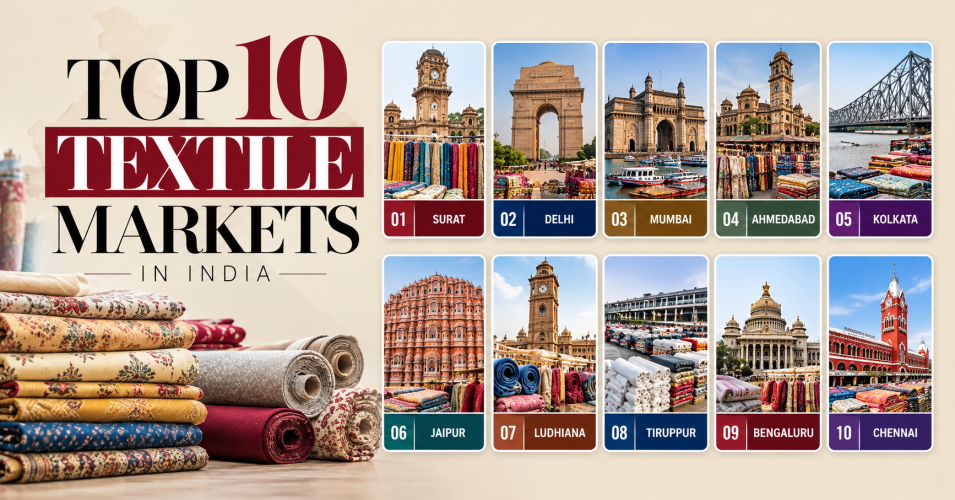
India is one of the world's major textile-producing countries, with established trading centres for cotton fabrics, synthetic textiles, silk, printed materials, embroidered fabrics and traditional clothing. For garment manufacturers, fashion brands, boutique owners, wholesalers and fabric retailers, choosing the right textile market can influence product quality, sourcing costs and supply consistency.
However, not every textile market specialises in the same products. Some destinations are known for fabric manufacturing and processing, while others focus on wholesale trading, traditional textiles, silk or ready-made garments. Understanding these differences helps buyers identify the most suitable market for their business requirements.
This guide explores the top 10 textile markets in India, explains what each destination is famous for and highlights the factors buyers should consider before purchasing fabrics in bulk.
Surat is one of India's most prominent textile centres, particularly known for synthetic fabrics, man-made fibres, sarees, dress materials and fashion-oriented textiles. Its textile ecosystem includes manufacturing, processing, printing, embroidery, trading and wholesale distribution.
The city is especially relevant for buyers sourcing polyester-based fabrics, georgette, chiffon, crepe, satin, printed materials and embellished textiles. These materials are widely used in women's ethnic wear, occasion wear, dresses and other fashion products, although availability and specifications vary by supplier.
Surat is also an important sourcing destination for businesses that need to compare multiple fabric options within the same textile ecosystem. Buyers can explore different qualities, finishes, designs and price points according to their intended application.
For garment manufacturers, the key advantage is access to a broad range of fashion-oriented textile suppliers. Before purchasing, confirm fabric composition, width, weight, finish, colour consistency and minimum order quantities. A fabric sample can help establish whether the material is suitable for cutting, stitching and the final garment design.
Why Surat is famous: Synthetic fabrics, polyester textiles, sarees, dress materials, printed fabrics and embroidered textiles.
Best suited for: Fabric wholesalers, garment manufacturers, women's fashion brands, boutiques and B2B textile buyers.
Gandhi Nagar Market in Delhi is a major wholesale destination associated with ready-made clothing and garment trading. Unlike textile centres focused mainly on fabric, this market is particularly relevant to buyers looking for finished apparel in bulk.
Retailers and resellers can explore women's clothing, men's wear, children's garments, casual apparel and other ready-made products, depending on the suppliers operating in the market.
Although its primary strength is garment trading, businesses sourcing clothing materials should distinguish between finished garments and fabrics sold for production. Not every garment wholesaler supplies fabric by the metre or offers manufacturing services.
For retailers, Gandhi Nagar can be useful for comparing styles, available sizes and wholesale product options. For manufacturers, a separate fabric-focused sourcing destination may be more appropriate.
Why Gandhi Nagar is famous: Ready-made garments, wholesale clothing and a wide variety of apparel categories.
Best suited for: Clothing retailers, resellers, distributors and businesses sourcing finished garments.
Mangaldas Market is a well-established textile trading destination in Mumbai. It is associated with fabrics, dress materials and textiles used for traditional and contemporary clothing.
The market is relevant to businesses searching for materials for dresses, ethnic wear, occasion wear and other apparel applications. Depending on the individual supplier, buyers may encounter different fabric compositions, patterns, textures and price ranges.
Mumbai's wider commercial environment also offers access to garment traders, textile businesses and fashion-related suppliers. This makes it important for buyers to identify the exact product category they need before visiting.
When sourcing from Mangaldas Market, compare fabrics according to their intended use. Materials for structured garments, flowing dresses and traditional clothing may require different weights, drape characteristics and finishing.
Buyers should also ask about fabric width, colour availability, minimum purchase quantities and repeat-order conditions before confirming a bulk purchase.
Why Mangaldas Market is famous: Fabric trading, dress materials, traditional textiles and clothing fabrics.
Best suited for: Boutique owners, designers, fabric retailers and garment businesses sourcing textiles.
Ahmedabad has a long history of textile production and trading, particularly associated with cotton textiles and fabric manufacturing. New Cloth Market is one of the city's recognised textile trading destinations.
Buyers can consider Ahmedabad when exploring cotton-related fabrics, dress materials and other textile products. The precise product range varies by supplier, so businesses should verify whether a shop specialises in raw fabric, finished textile products or ready-made garments.
Cotton fabrics are important for many apparel categories because they can offer breathability and versatility. However, fabric performance depends on construction, fibre composition, finishing and intended use rather than the fibre name alone.
For bulk sourcing, buyers should compare fabric samples and request information about width, weight, shrinkage, colourfastness and available quantities. These checks are particularly useful when the same fabric will be used across a production batch.
Why New Cloth Market is famous: Textile trading, cotton-related products, dress materials and fabric sourcing.
Best suited for: Fabric wholesalers, garment manufacturers, clothing retailers and textile traders.
Tiruppur is one of India's best-known knitwear manufacturing centres. It is better understood as a broader manufacturing and sourcing hub than as a single conventional textile market.
The city is particularly associated with knitted fabrics and garments, including T-shirts, polo shirts, casualwear, children's knitwear and other knitted apparel. Its manufacturing ecosystem makes it relevant to brands and businesses seeking production capabilities alongside material sourcing.
For businesses developing their own clothing collections, Tiruppur can be useful when sourcing knitted products or working with suppliers involved in garment production. Buyers should clarify whether they require knitted fabric, finished garments or a complete manufacturing arrangement.
Important purchasing considerations include fibre composition, fabric weight, stretch, shrinkage, colour consistency, stitching specifications and quality inspection. For repeat production, written specifications and approved samples can help maintain consistency between orders.
Why Tiruppur is famous: Knitwear, knitted fabrics, T-shirts, cotton garments and apparel manufacturing.
Best suited for: Clothing brands, knitwear retailers, garment manufacturers and bulk apparel buyers.
Ludhiana is an important textile and garment manufacturing centre, particularly known for knitwear, hosiery and winter clothing. Its manufacturing ecosystem serves businesses looking for seasonal apparel and knitted products.
The city's textile and garment businesses are associated with sweaters, knitted garments, thermal clothing, winterwear and related categories. Specific fabric and garment availability depends on individual manufacturers and suppliers.
Ludhiana can be particularly relevant to retailers planning winter collections or businesses sourcing knitted products. Buyers should consider seasonal demand and production lead times when planning orders, because the timing of procurement can affect how much stock is available for the selling season.
Before purchasing, confirm fabric composition, garment specifications, size grading, finishing and delivery timelines. If the order involves a large quantity, ask about quality checks and how defects will be handled.
Why Ludhiana is famous: Knitwear, hosiery, sweaters, winterwear and knitted textile products.
Best suited for: Winterwear retailers, knitwear businesses, apparel brands and bulk clothing buyers.
Jaipur is widely associated with traditional Indian textiles, printed fabrics and ethnic clothing. Bapu Bazaar is a recognised shopping area for traditional products, while Sanganer is particularly associated with printed textiles and textile production.
These sourcing areas can be relevant for businesses looking for traditional prints, floral designs, cotton fabrics and Rajasthani-inspired textiles. The exact wholesale options depend on the supplier and whether the buyer requires fabric, finished garments or other textile products.
Jaipur is particularly interesting for boutiques and fashion businesses that want to develop collections with distinctive traditional patterns. Buyers should ask about the printing technique, material composition, colourfastness and care requirements.
For finished garments, quality checks should include stitching, sizing and fabric consistency. For fabric orders, requesting a sample can help confirm the design and material before committing to a larger quantity.
Why Jaipur is famous: Traditional prints, block-print textiles, cotton fabrics and ethnic clothing.
Best suited for: Ethnic-wear boutiques, fabric retailers, designers and businesses sourcing printed textiles.
Chickpet is a historic textile trading area in Bengaluru, known for its association with sarees, fabrics, traditional clothing and textile-related products.
The market can be relevant for businesses sourcing traditional textiles and materials for clothing production. Product availability differs between sellers, so buyers should confirm whether they need sarees, dress materials, fabric by the metre or ready-made apparel.
Bengaluru's wider retail and commercial ecosystem also serves a variety of fashion businesses. Buyers can use Chickpet as a starting point for textile sourcing while checking whether suppliers meet their specific wholesale requirements.
When purchasing fabrics, compare texture, composition, width, colour and finishing. For larger orders, also confirm minimum quantities, payment terms, delivery arrangements and the availability of the same material for future orders.
Why Chickpet is famous: Textile trading, sarees, traditional clothing and fabric sourcing.
Best suited for: Textile retailers, boutiques, traditional clothing businesses and fabric buyers.
Burrabazar, also known as Bara Bazar, is a major wholesale trading district in Kolkata. Its broad commercial network includes textiles, garments and numerous other wholesale product categories.
For textile buyers, Burrabazar can be relevant when exploring fabrics, traditional clothing materials and garment-related products. However, it is a large mixed wholesale district rather than a market devoted exclusively to a single fabric category.
Businesses should identify the specific textile products they require and verify which suppliers carry them. This can help reduce unnecessary visits and improve sourcing efficiency.
Buyers purchasing traditional textiles or dress materials should check the product specifications and quality carefully. Fabric composition, colour consistency, finishing and repeat availability are important when the materials will be used for regular retail sales or garment production.
Why Burrabazar is famous: Large-scale wholesale trading, textiles, garments and a broad range of commercial products.
Best suited for: Wholesale traders, retailers, fabric buyers and businesses sourcing textiles in eastern India.
Kanchipuram is renowned for its silk sarees and traditional silk-weaving heritage. Unlike markets focused on synthetic fabrics or knitwear, this destination is particularly relevant to buyers interested in traditional silk textiles and premium saree collections.
Its association with silk sarees makes it important for businesses serving customers who value traditional Indian clothing, wedding attire and special-occasion textiles.
Buyers should verify the fabric composition, weaving details, product origin and seller's description before purchasing. The word "silk" alone does not establish the exact composition or authenticity of a product. Clear product specifications and reliable supplier documentation are especially important for premium merchandise.
Businesses sourcing traditional silk products should also consider customer demand, price positioning and the level of product information required for resale.
Why Kanchipuram is famous: Traditional silk sarees, silk weaving and premium Indian ethnic textiles.
Best suited for: Saree retailers, ethnic-wear boutiques, wedding-wear businesses and buyers of traditional silk products.
The right textile market depends on the material or product you intend to source. Surat is especially relevant for man-made fabrics and fashion textiles, Ahmedabad for cotton-related textiles, Tiruppur for knitwear, Ludhiana for winter garments and Kanchipuram for traditional silk sarees. Other destinations offer different combinations of fabrics, garments and wholesale trading.
Before choosing a market, define your product specifications. Consider the intended garment, fabric composition, required quantity, target selling price and expected quality level. This helps narrow the search to suppliers who actually handle the products your business needs.
Next, compare the complete commercial offer rather than focusing only on the quoted price. Minimum order quantities, transportation costs, payment terms, quality checks, delivery timelines and repeat-order availability can all affect the final cost of sourcing.
For fabric purchases, ask about composition, width, weight, finish, colour consistency and shrinkage. For finished garments, check stitching, sizing, lining, embellishment and construction. Where practical, approve a sample before placing a large order.
Finally, understand whether the supplier is a manufacturer, wholesaler, distributor or retailer. Each business model serves different needs, and the right choice depends on whether you require raw materials, available stock or production services.
Fabric affects how a garment looks, feels and performs. Even fabrics with similar appearances can differ in fibre composition, weight, weave, finishing and suitability for a particular design.
For garment manufacturers, the right material can influence cutting efficiency, stitching requirements, garment drape and production cost. For retailers and fashion brands, consistent fabric quality helps maintain a more predictable product range.
Businesses that purchase materials repeatedly should keep approved samples and written specifications. Recording fabric references, colours, widths and supplier details makes it easier to compare future orders against the original requirements.
A reliable sourcing process should also account for availability. Before promising customers a specific product or production schedule, confirm the required quantity and expected delivery timeframe with the supplier.
If you are searching for a textile market in India to source fabric for garment manufacturing, fashion collections or wholesale textile requirements, Ajmera Fashion Limited is a B2B contact you can approach to discuss your sourcing needs.
Ajmera Fashion Limited operates in the textile and apparel sector. Buyers can enquire about available fabric categories and confirm product specifications, minimum order quantities, pricing and delivery terms directly with the company.
Whether you are a garment manufacturer, boutique owner, fabric retailer, fashion brand or wholesale buyer, the first step is to identify the material that matches your intended application. Share your fabric type, approximate order quantity and business requirements so the team can clarify whether the available products meet your needs.
Looking for wholesale fabric for your business? Contact Ajmera Fashion Limited to discuss your B2B fabric sourcing requirements.
Phone: +91 88494 29440
Email: info@ajmerafashion.com
Contact the team to enquire about available fabrics and wholesale sourcing options. Confirm product specifications, quantities, pricing and delivery terms before placing an order.
Major textile and sourcing destinations include Surat, Ahmedabad, Mumbai, Tiruppur, Ludhiana, Jaipur, Bengaluru, Kolkata and Kanchipuram. Each location has different strengths, from synthetic fabrics and cotton textiles to knitwear, winter garments, printed fabrics and silk sarees.
Surat is a major destination for synthetic fabrics and fashion-oriented textiles. Ahmedabad is relevant for cotton-related products, while Mumbai and other textile centres offer different fabric and trading options. The best market depends on the required composition, quantity, quality and intended use.
Several Indian cities have established textile and apparel industries. Surat is prominent in man-made fabrics and textile processing, Tiruppur in knitwear, Ludhiana in knitwear and winter garments, and Ahmedabad in cotton-related textiles and textile production.
Check the fibre composition, width, weight, finish, colour consistency, shrinkage, available quantity and minimum order requirements. Request a sample and confirm the specifications in writing when practical.
No. A textile market is generally a trading destination where buyers purchase products from sellers. A manufacturing hub includes production facilities and related businesses. Some locations support both trading and manufacturing, but buyers should confirm the role of each supplier.
You can contact Ajmera Fashion Limited at +91 88494 29440 or info@ajmerafashion.com to discuss your requirements and confirm the fabric products and commercial terms currently available.
India has diverse textile markets serving different sourcing needs. Surat is particularly relevant for man-made fabrics and fashion textiles, Ahmedabad for cotton-related products, Tiruppur for knitwear, Ludhiana for winter garments, Jaipur for traditional printed textiles and Kanchipuram for silk sarees.
Choosing the right destination starts with understanding your product requirements, comparing suppliers and verifying quality before ordering in bulk. A well-planned sourcing process can help businesses make more informed purchasing decisions and maintain consistent product standards.
For businesses looking for wholesale fabric sourcing options, Ajmera Fashion Limited is an additional B2B contact. Reach out to discuss your requirements and confirm whether the available fabrics are suitable for your business.

Looking for the best cotton fabric wholesale marke...

Discover the top 10 textile markets in India for w...

Discover 10 major wholesale garment markets and te...
Looking for wedding gown wholesale options for you...

Looking for a gown wholesale market in Surat? Expl...

सिर्फ 9 साल की उम्र à¤...

