
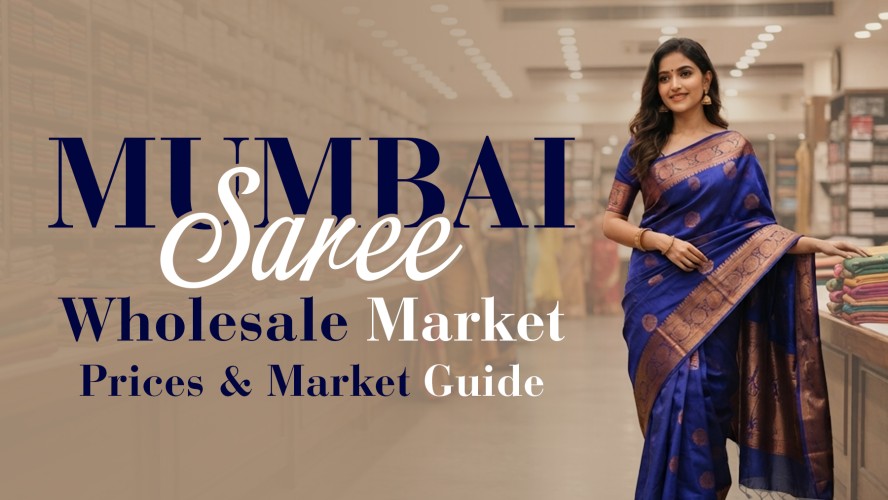
When you search for “Mumbai Saree Wholesale Market,” you are likely a retailer, boutique owner, reseller, or someone planning to add sarees to your clothing business. You want to know where the wholesale action happens in Mumbai, what kind of sarees you can source, how pricing works, and what to check before committing to a supplier. This guide gives you exactly that—practical, street-level understanding without made-up shop names, fake statistics, or exaggerated claims.
Mumbai is one of India’s largest textile trading centres. Its wholesale markets serve local retailers, outstation buyers, export houses, and online sellers. Over the next few sections, we will walk you through where buyers go in Mumbai, the saree categories commonly stocked, what determines wholesale rates, how to evaluate a supplier, and how physical market visits compare with online B2B sourcing. By the end, you will have a clear sourcing framework—whether you decide to walk through Mumbai’s market lanes or explore a digital wholesale partner like Ajmera Fashion Limited.
The Mumbai saree wholesale market is not one single building but a collection of concentrated textile and apparel trading zones spread across the city. These hubs are populated by wholesalers, stockists, distributors, and manufacturers who trade sarees in volume. The buyers are typically small and medium retailers, boutique owners, multi-store chains, institutional buyers, and export agents.
Like any major wholesale centre, Mumbai’s saree trade works on the principle of volume-based pricing. A shop that will sell you a single saree at near-retail rates will sharply drop the per-piece price when you order in dozens or hundreds. The market’s product breadth covers everything from affordable daily-wear synthetics to heavily embroidered bridal sarees, depending on which lane you walk into and which supplier you speak with.
Understanding this ecosystem helps you plan: you don’t visit Mumbai to buy five sarees; you visit to build an inventory line that feeds your store for the next season.
Seasoned buyers know which pockets of Mumbai are more likely to carry specific categories. Here are the major wholesale clusters widely referred to by textile traders.
Mangaldas Market (Near Crawford Market)
Mangaldas Market is arguably the most recognised textile wholesale hub in Mumbai. It houses hundreds of shops and godowns dealing in sarees, dress materials, and suit pieces. Buyers can find cotton sarees, silk and art silk sarees, printed georgette, chiffon, and embroidered sarees. Both budget and mid-premium segments are present, and many outstation retailers make this their first stop. Because the market is dense, it’s practical to compare multiple suppliers within adjacent lanes.
Mulji Jetha Market (Pydhonie)
Mulji Jetha is another heavyweight textile market, often mentioned alongside Mangaldas. The saree wholesale section here includes suppliers dealing in fancy, party-wear, and embroidered sarees, as well as cotton and silk varieties. Some shops specialise in designer-style or heavily worked pieces that boutiques buy for festive displays. The market also has a strong presence of fabric wholesalers, making it useful for multi-category buyers.
Dadar (Gokuldas Pasta Road & Surrounding Lanes)
Dadar’s wholesale cluster is smaller in scale compared to Mangaldas and Mulji Jetha but remains a practical sourcing spot, especially for synthetic sarees, printed sarees, and low-to-mid-range options. Local retailers who serve value-conscious customers often replenish stock from Dadar’s wholesale shops. The area also has a few distributors catering to the online reseller community.
Kalbadevi and Bhuleshwar
These older trading zones have textile shops interspersed with other commodity wholesalers. Buyers may come across saree suppliers stocking traditional silk sarees, kota cotton, and occasional handloom varieties. While not as organised as the main markets, they can be worth exploring for unique finds and long-established family-run wholesalers.
Santacruz (Khar Danda Road stretch)
This area is better known for readymade garments and export surplus, but some wholesalers here also stock synthetic sarees and contemporary printed styles at competitive wholesale rates. It is frequented by buyers who already visit the garment market and want to add sarees to their mixed inventory.
No single market exclusively sells one type of saree. A supplier in Mangaldas might specialise in party-wear sarees while the next shop deals strictly in cotton. Walking through a lane and checking the displayed stock is still the most reliable way to find a match.
Mumbai’s wholesale trade offers an extensive saree range because the city draws products from Surat, Varanasi, Bengaluru, and other manufacturing clusters. The categories commonly available include:
Cotton sarees – handloom-inspired, printed kota, Maheshwari-style, Mangalagiri-style, and daily-wear cotton blends.
Silk and art silk sarees – Banarasi-style, pure silk, tussar, Bhagalpuri silk, and affordable art silk alternatives for wedding and festive seasons.
Georgette and chiffon sarees – lightweight, printed, and embroidered variants widely sourced by boutiques and online sellers.
Crepe and satin sarees – known for their drape and sheen; used in party-wear and contemporary designs.
Printed sarees – digital prints, block prints, abstract patterns, and floral designs that cater to casual and office-wear segments.
Embroidered and designer-style sarees – zari, sequins, thread work, stone work, and mirror work sarees for festive and bridal demand.
Net and organza sarees – fashionable, high-margin pieces that boutiques use for window displays and social media sales.
Synthetic daily-wear sarees – poly-cotton, nylon blend, and easy-maintenance sarees that sell round the year.
Retailers typically order a mix: 60-70% fast-moving daily-wear and printed sarees, and 30-40% higher-margin party-wear or silk pieces, depending on their customer profile.
Any fixed wholesale rate card that applies across Mumbai’s markets is a myth. The per-saree cost depends on several moving parts:
Fabric quality – a handloom cotton saree will cost differently from a powerloom cotton blend.
Workmanship – hand-embroidered designs are priced higher than machine embroidery or plain digital prints.
Order quantity – wholesale meaningfully kicks in only at higher volumes. An order of 12 pieces per design will receive a different rate than an order of 120.
Source of supply – a manufacturer-level transaction may offer tighter pricing compared to a multi-layer distributor.
Seasonality – prices may firm up during peak wedding and festival months due to higher demand.
Add-on costs – individual tagging, custom folding, specific packaging, and transportation add to the landed cost.
Indicative trade observations suggest that entry-level printed cotton sarees can start from a few hundred rupees per piece in bulk, while party-wear embroidered sarees with intricate work can reach several thousand rupees per piece. Use any price reference as a broad signal and always get a live quotation against your exact specification and volume before placing an order.
A supplier’s low price is meaningless if the quality fluctuates or the dispatch is delayed. Before finalising, examine these factors:
Consistency – ensure the bulk lot matches the sample shown. Uneven dyeing or weak borders will increase returns and customer complaints.
Catalogue freshness – a wholesaler who updates designs regularly keeps your store looking current.
Price transparency – genuine wholesalers share rate lists and don’t change the price after you’ve placed an order.
MOQ flexibility – some suppliers allow mixing of designs within a category, which helps small boutiques.
Packaging quality – sarees that arrive cleanly folded and tagged save you preparation time.
Dispatch reliability – late deliveries during festive seasons directly hurt your sales. Check the supplier’s dispatch record with existing clients if possible.
Replacement terms – understand the supplier’s policy for manufacturing defects. Most wholesale trades allow limited replacement with prior approval.
Billing and compliance – proper GST invoices matter for your books and input tax credit if you are a registered business.
Communication – a supplier who responds to queries, shares product videos, and updates you on despatch status builds a dependable long-term partnership.
Mumbai’s markets have been a sourcing backbone for generations of saree retailers, and they will continue to be relevant. But not every buyer can afford the time and expense of a Mumbai trip multiple times a season. As your store grows, you may want to compare what is available beyond the city’s lanes, access fresher designs more frequently, and still maintain reliable supply.
This is where a wholesale partner like Ajmera Fashion Limited fits into your sourcing strategy.
Ajmera Fashion Limited is a B2B supplier working with retailers, boutique owners, and resellers across the country. Instead of requiring you to visit a physical market, the company offers an online catalogue organised by fabric, work type, and occasion. You can review the collection at your convenience, understand the wholesale pricing, and directly discuss your quantity, budget, and delivery requirements with the team. For a retailer in a non-metro city, this means design access that may otherwise require a multi-day market trip.
The workflow is simple: explore the online catalogue, shortlist what suits your customer base, and contact Ajmera Fashion Limited. The team assists with product details, order terms, and dispatch—essentially what a reliable market wholesaler does, but with the added advantages of digital convenience and wider geographic coverage.
For retailers looking to compare online wholesale sourcing options, Ajmera Fashion Limited can be explored as an additional B2B supplier alongside your existing Mumbai vendor relationships.
The Mumbai saree wholesale market remains a significant sourcing destination for bulk buyers. Whether you walk through Mangaldas Market, Mulji Jetha, or Dadar’s wholesale lanes, the opportunity to physically inspect fabric, compare prices face-to-face, and build supplier relationships is genuine value. Knowing your product categories, understanding what drives wholesale pricing, and having a supplier evaluation checklist will help you make informed, profitable inventory decisions.
At the same time, modern retail does not require you to depend entirely on physical market visits. Online B2B sourcing has matured, and platforms like Ajmera Fashion Limited allow you to discover designs, place bulk orders, and receive stock at your doorstep—whether you are in Mumbai, a different state, or even another country. The goal remains the same: stock what sells, maintain quality consistency, and protect your margins. Use the sourcing route—physical, online, or both—that best aligns with your business model and growth plans.
Need sarees in bulk for your retail store, boutique, or resale business? Explore Ajmera Fashion Limited’s wholesale collection and contact the team with your product and quantity requirements.
What is the Mumbai saree wholesale market?
It is the collective term for major textile trading hubs in Mumbai—such as Mangaldas Market, Mulji Jetha Market, and Dadar—where wholesalers, distributors, and manufacturers sell sarees in bulk to retailers, boutiques, and resellers.
Where can I buy sarees wholesale in Mumbai?
Buyers commonly visit Mangaldas Market (near Crawford Market), Mulji Jetha Market (Pydhonie), Dadar, Kalbadevi, and Bhuleshwar. Each area has its own mix of saree types and supplier specialisations.
Which types of sarees are available wholesale in Mumbai?
Cotton, silk and art silk, georgette, chiffon, crepe, satin, printed, embroidered, net, organza, and synthetic daily-wear sarees are commonly sourced from Mumbai’s wholesale markets, depending on the supplier.
How do I choose a reliable saree wholesaler in Mumbai?
Evaluate consistency of fabric and finishing, MOQ terms, pricing transparency, catalogue refresh frequency, packaging, dispatch timeline, replacement policy, and GST billing compliance. A trial order is always recommended before placing a large order.
What is MOQ in saree wholesale?
MOQ (Minimum Order Quantity) is the smallest number of pieces or designs a wholesaler will sell in one transaction. It can be defined per design, per colour, or as a minimum total order value.
Can I buy sarees wholesale online instead of visiting Mumbai?
Yes. Several B2B suppliers, including Ajmera Fashion Limited, provide online wholesale saree catalogues. You can source from anywhere without travelling to Mumbai, as long as you follow a clear product selection and order verification process.
Is buying wholesale sarees online safe?
It is safe when you deal with established B2B suppliers who provide clear product images, transparent pricing, proper GST invoicing, and verifiable business credentials. Always start with a small test order to verify quality before scaling up.
How can retailers compare saree suppliers effectively?
Create a comparison sheet covering per-piece price, MOQ, fabric range, design variety, dispatch time, and after-sale support. Compare at least three suppliers for the same saree category before making a final decision.
Can I order sarees in bulk from outside Mumbai?
Yes. Many Mumbai wholesalers cater to outstation buyers through phone or digital orders, and online B2B platforms further simplify the process with nationwide dispatch. Confirm logistics costs and delivery timelines in advance.
How can I contact a wholesale saree supplier like Ajmera Fashion Limited?
You can visit the Ajmera Fashion Limited website, browse the wholesale collection, and use the enquiry form or contact details provided to discuss your specific bulk requirements with the team
For wholesale orders, product catalog, pricing,inquiries within India, please contact our team directly.
📞 Phone / WhatsApp: +91 884 942 9440
📧 Email: info@ajmerafashion.com
Our team will assist you with all your requirements.

Discover Bangalore wholesale saree market with thi...

Explore Jaipur saree wholesale market for bulk leh...
A practical B2B guide to Hyderabad's saree wh...
Discover Kolkata saree wholesale market for bulk s...

A practical B2B sourcing guide to Mumbai’s whole...
Explore Delhi saree wholesale market for bulk sare...

